Investing and buying lottery tickets: Is it a tax on the poor, or a wise risk? Who has a better chance of winning in the long run?
In this era where "everyone wants to get rich overnight", investing and buying lottery tickets seem to be two paths to wealth freedom - one requires knowledge, patience and strategy, and the other relies on luck, intuition and fantasy.
Some people double their money in the stock market, while others spend a lot of money at the betting station, dreaming of becoming a billionaire in the next second.
The question is: Which is the more realistic wealth channel, investing or buying lottery tickets? In the long run, is buying lottery tickets more "exciting" or investing more reliable? Or are these two just "different ways of gambling for the poor and the rich"?
1. On the surface: investing and buying lottery tickets are both "risky"
Let's understand it literally:
Investing: using money in exchange for a greater possible return in the future, such as stocks, funds, real estate, cryptocurrencies, gold, etc., with risks and benefits coexisting.
Lottery: Use small money to win huge returns. A lottery ticket worth tens of yuan may bring hundreds of millions of bonuses, but the probability of winning is often "one in a million".
What they have in common is that they are not guaranteed to win and are full of uncertainty. Investment may encounter a stock market crash, and lottery may never win. So some people think that investment and buying lottery tickets are essentially a kind of "gambling", the difference is just the packaging form.
But is it really so?
2. In-depth comparison: the core difference between investment VS lottery
Although investment and buying lottery tickets seem to be a "risk-taking for return" behavior on the surface, in essence, there is a world of difference between them. There are significant differences in the operation method, result probability, psychological mechanism and even long-term benefits between the two.
First of all, in terms of the probability of success, the winning rate of investment is much higher than that of lottery. Although investment does not guarantee a steady profit, a mature investment strategy, after scientific diversification and risk control, can achieve a long-term success rate of 60% to 80%.
The lottery is completely dependent on luck, and the probability of winning is usually one in millions or even tens of millions, which is almost close to "buying is equal to not buying".
In terms of information availability and analytical ability, investment is a researchable, learnable, and traceable activity. Whether through fundamental analysis, technical indicators, or market trend judgment, investors have the opportunity to use knowledge and tools to improve their winning rate. Buying lottery tickets is a completely random event.
There is no way to increase the probability of winning. The number combination depends entirely on guessing, and there is no strategy at all.
Let's look at the ability of risk management. Investors can control risks through asset allocation, stop-loss mechanisms, and long-term holdings.
For example, they can spread funds to different fields (such as stocks, bonds, funds, gold, etc.), reduce positions to stop losses when they fall, and lock in profits when they rise. Buying lottery tickets is "buy and wait for the lottery", there is no risk buffer mechanism, losing money is almost the norm, and winning is almost impossible.
In terms of long-term return rate, the gap between the two is even more obvious. According to historical data, the average annual return rate of the S&P 500 index is between 6% and 10%. Long-term holding can often outperform inflation and achieve steady asset growth.
The long-term expected value of buying lottery tickets is negative - that is, the more you buy, the more you lose. Most people not only do not win money, but continue to pay money to "support" the lottery system.
Finally, from a psychological experience point of view, investment requires rationality, restraint and patience. The return on investment is often slow and stable, and it takes time to accumulate.
Buying lottery tickets is a typical emotional game, which provides instant stimulation and fantasy, allowing people to immerse themselves in the beautiful fantasy of "if I win" in a short period of time. This is why lottery tickets are extremely addictive, while investment requires self-discipline and long-term planning.
In summary, investment is a "controllable adventure" based on knowledge, logic and long-term judgment; while lottery tickets are "pure gambling" based on chance and fantasy. From the winning rate, risk control, return efficiency to psychological maturity, investment is undoubtedly more realistic and feasible.
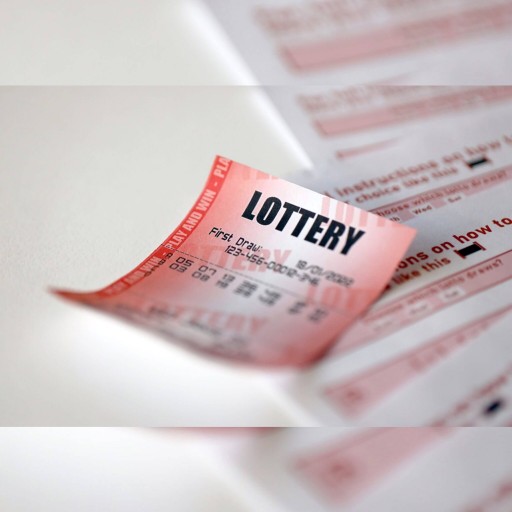
3. Why do so many people still love to buy lottery tickets?
Despite the slim chance of winning, billions of people around the world are addicted to buying lottery tickets. Why?
1. Instant gratification psychology
Investment requires waiting and time compounding. When buying lottery tickets, you only need to scratch and draw the prize, and the result will be known in a few seconds. This is a kind of satisfaction for "instant pleasure".
2. Fantasy of changing destiny
Under the circumstances of low income, high pressure of life, and blocked upward channels, buying lottery tickets has become the "last hope" for many people. This is not for money, but a fantasy of escaping from reality.
3. Low threshold to participate
You don't need academic qualifications, knowledge, account opening, or K-line research. As long as you have 20 yuan, you can dream of a life of "quitting tomorrow".
4. "Winning myth" created by society
The media always magnifies the news of "a certain uncle getting rich overnight", but never reports the story of millions of people silently disappointed. Humans are naturally prone to remember miracles and ignore probabilities.
4. Why is it easier to win "friends of time" by investing?
Real investment is not chasing hot spots or short-term speculation, but rational layout based on logic, data, and trends. For example:
Index funds, with a long-term annualized rate of return of 6%-8%, do not rely on technology or pick individual stocks.
Dividend stocks, blue-chip stocks with stable dividends, can bring passive cash flow.
Real estate investment has the function of preserving value and rental returns.
Gold or commodities provide risk protection during the inflation cycle.
As long as you avoid speculative mentality, control risks and hold for a long time, the chances of winning in investment are much higher than buying lottery tickets. The miracle of investment is not to get rich overnight, but to get rich steadily.
For example:
If you spend 200 yuan a month to buy lottery tickets, you will spend 2,400 yuan a year and 24,000 yuan in 10 years, and there is a high probability that you will get nothing;
If you invest this 200 yuan a month in an index fund with an annualized rate of 8%, you can accumulate nearly 36,000 yuan in 10 years and nearly 100,000 yuan in 20 years.
This is the charm of "compound interest" and the underlying logic of investment.
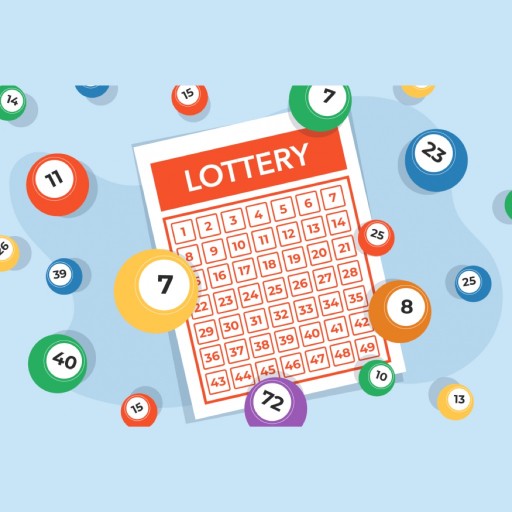
5. The psychological cognitive difference between investment and lottery: the watershed of thinking between the rich and the poor?
Many people say: buying lottery tickets is a "tax for the poor" and investing is a "game for the rich." In fact, it is not entirely correct.
The real difference is not whether you have money or not, but the different ways of understanding "risk" and "return":
Poor people are more likely to seek high returns, quick returns, and emotional returns;
Rich people pay more attention to long-term returns, risk management, and compound interest accumulation.
In other words, it is not that you choose investment or lottery, but which life strategy you choose
If you can understand the essence of investment, are willing to take reasonable risks, and are willing to wait for the return of time, then you already have "rich thinking";
And if you only think about "changing your fate by luck", are unwilling to learn, and are unwilling to change the status quo, then even if you win the lottery, you may soon return to the starting point.
6. Conclusion: Rational people will eventually win the future
Buying lottery tickets is not illegal, nor is it a "bad habit", but treating it as a path to wealth is the most dangerous misunderstanding.
You can occasionally spend a few dollars to dream, but if you really want to change your destiny and accumulate wealth, the only way out is: rational investment, long-term planning, and steady execution.
Investment is visible effort, and lottery is invisible waiting.
Investment is the realization of knowledge, and lottery is the addiction to luck.
In the long run, the winner is already determined: one relies on the compound interest of probability, and the other relies on the fantasy of miracles.
Which path you choose determines not only your wealth and destiny, but also your attitude towards life.
 1
1 1
1OTHER NEWS
-
- How much longer can the eurozone hold out? The ECB has reached the end of its rate hike cycle
- By ZXY 01 Aug,2025
-
- Is German manufacturing losing its edge? The latest casualty of the US-China strategic rivalry
- By ZXY 29 Jul,2025
-
- Trump reignites tariff war, global supply chains face another shakeup
- By ZXY 28 Jul,2025

-
- Credit card points and rewards seem cost-effective, but they actually hide these traps
- By ZXY 01 Sep,2025

-
- Fixed deposits are not as good as flexible financial management? Analysis of financial management trends in 2025
- By ZH 24 Jul,2025

-
- Yield Curve Inversion Resurfaces: Is There Still Hope for a Soft Landing in the U.S. Economy?
- By ZXY 31 Jul,2025
-
- How do I Choose Between Selling my Home and Renting it out?
- By Wendy 24 Apr,2023

-
- With China's exports declining, is the global consumption chain beginning to break?
- By ZXY 31 Jul,2025

-
- Why Do Most People Overlook “Cash Flow Risk”?
- By ZXY 11 Oct,2025

-
- How much longer can the seven tech giants of the US stock market withstand high interest rates?
- By ZXY 28 Jul,2025
-
- The widening U.S. fiscal deficit is fueling debt concerns
- By ZXY 30 Jul,2025

-
- Who is the Primary Lender When Applying for a Home Loan? These Points are Important!
- By Little Grapes 24 Apr,2023