Why are oil prices more unpredictable than ever before?
In the past few decades, oil price fluctuations have never been uncommon. But today, the global energy market is like a crazy roller coaster, with oil prices not only rising and falling rapidly, but also becoming increasingly unpredictable. The sharp rise in 2022, the sharp decline in 2023, and the signs of rebounding again in 2024...
Many investors, consumers and even professional economists are confused: Why are oil prices no longer "playing by the rules"?
1. The "formula" of the past has failed
In traditional economic models, changes in oil prices often follow a "classical logic": supply and demand + geopolitics + US dollar exchange rate. When demand is strong and supply is tight, oil prices rise; when production is sufficient and the economy slows, oil prices fall. Add tensions in the Middle East or the strength of the US dollar, and you can roughly infer the trend.
But now, the situation has become much more complicated than these. The past "empirical formula" began to fail frequently because the factors affecting oil prices have undergone structural changes.
2. Five major variables make oil prices difficult to predict
Geopolitics: Conflict is no longer a single variable, but a multi-point outbreak
In the past few decades, oil price surges have often been related to Middle East wars, such as the Gulf War and the Iraq War. However, now, geopolitical conflicts are showing a "multi-center, long-term, and difficult to predict" trend.
The Russian-Ukrainian war completely disrupted Europe's energy supply system, prompting the EU to shift from relying on Russia to finding diversified energy sources; the situation in the Middle East remains complex, with frequent conflicts in Iran, Israel, Yemen and other regions, affecting global oil transportation routes and psychological expectations.
These variables may trigger oil price riots at any time, but they are difficult to include in model predictions.
OPEC+ policy: The alliance is no longer a monolithic entity, and gaming increases variables
The Organization of Petroleum Exporting Countries (OPEC) and non-OPEC oil-producing countries such as Russia (collectively known as OPEC+) used to be the "regulators" of oil price stability. But in recent years, the alliance has become increasingly divided.
Saudi Arabia insists on limiting production to maintain prices, while some member countries are more concerned about their own fiscal revenue and are unwilling to cooperate in production cuts.
In addition, the strong rise of US shale oil has challenged OPEC+'s market regulation capabilities. Once oil prices rise, US shale oil quickly resumes production and suppresses prices; once oil prices fall, OPEC+ faces the dilemma of whether to continue to cut production. This "mutual restraint" structure makes price changes more uncertain.
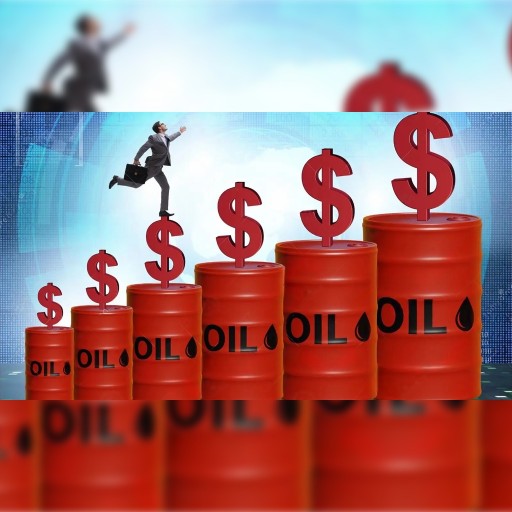
New energy and policy transformation: demand trends are complex and changeable
The world is accelerating energy transformation and promoting the transition from fossil energy to renewable energy. But this transition is not linear, but accompanied by huge structural fluctuations.
For example, Europe is accelerating "decarbonization", but natural gas and oil are still basic energy in the short term; China is vigorously developing electric vehicles, but still relies on a large amount of crude oil imports; emerging markets such as India, the Middle East, and Africa are new engines for rapid growth in energy consumption.
At a stage where new energy has not been fully replaced and traditional energy is indispensable, oil prices have become extremely sensitive and difficult to predict.
Financial capital and speculative behavior: oil prices are no longer just "commodity prices"
Today, crude oil is not only energy, but also a financial asset. The ups and downs of oil prices are not only a reflection of supply and demand, but also the result of the combined effects of capital flows, market sentiment, and derivative transactions.
Participants such as large hedge funds, commodity ETFs, and algorithmic trading systems play an increasingly important role in the oil market. A piece of news, an interest rate change, or even a fluctuation in market sentiment will be rapidly amplified by financial capital, causing "irrational surges and plunges" in oil prices.
Simply put, oil prices have been partially "financialized", the price formation mechanism is becoming less and less pure, and the difficulty of prediction is also rising.
Extreme climate and supply chain disturbances: External shocks are frequent
Extreme weather events (such as hurricanes, cold waves, high temperatures and droughts) are also increasingly disrupting oil production and transportation.
For example, hurricanes may force the shutdown of oil fields in the Gulf of Mexico in the United States; global high temperatures will push up electricity demand and indirectly stimulate oil consumption; extreme winter cold will increase heating oil demand and disrupt market balance.
At the same time, supply chain events such as shipping bottlenecks, Red Sea attacks, and Suez Canal blockages may also push up oil prices in the short term - but these events are often difficult to predict and cannot be included in traditional economic models.
3. The oil price dilemma you feel is not just about oil prices
Oil price fluctuations have a real impact on everyone:
Rising fuel costs: directly affect the cost of daily life, especially in countries without price subsidies.
Increase in air fares: The cost of aviation fuel pushes up air ticket prices, affecting travel plans.
Price chain reaction: Rising transportation costs will eventually be passed on to commodity prices, fueling inflation.
Corporate cost pressure: Manufacturing, logistics, construction and other industries are forced to raise prices or reduce profits in the face of surging raw material prices.
For this reason, governments are becoming more and more sensitive to oil prices, and even regulate them through strategic reserve releases, price limit interventions, etc., which further interferes with the natural supply and demand mechanism of the market.
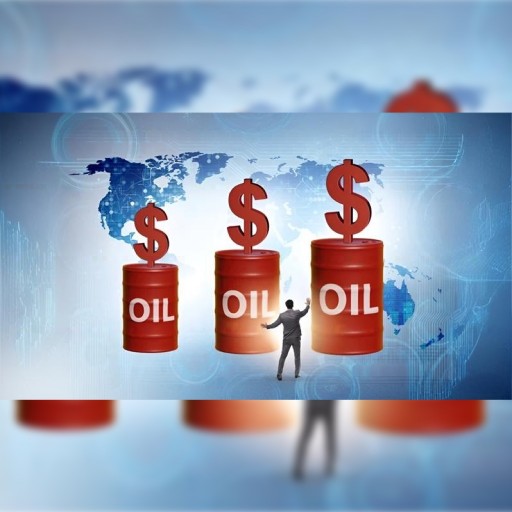
4. In the "chaotic oil price era", how should we respond?
Faced with increasingly unpredictable oil prices, both ordinary consumers and investors need to change their mindsets and adopt more flexible strategies:
Consumers:
Arrange travel reasonably and try to avoid long-distance self-driving when oil prices are high;
Choose energy-saving cars or hybrid cars to reduce dependence on traditional fuels;
Pay attention to national energy subsidies and price policies to avoid sudden increases in expenditures.
Investors:
Diversify asset allocation and do not place heavy positions on oil and gas related stocks or funds;
Pay attention to the market trends of oil price derivatives and judge emotional changes rather than relying solely on supply and demand logic;
Use price fluctuations to conduct short-term strategies rather than blindly holding oil price assets for a long time.
5. Conclusion: The future of oil prices is the resonance of "multiple variables + uncertainty"
Oil prices, once the "barometer" of the industrial age, have now become the most typical epitome of global economic uncertainty. What affects oil prices is no longer just production and demand, but the joint game of finance, geography, policy, climate, emotions, and technology.
In today's era, predicting oil prices is no longer just a "calculation math problem", but more like solving a multiple-choice question of "politics + climate + economy + psychology". And every choice will affect the lives of billions of people around the world.
You cannot control the ups and downs of oil prices, but you can understand the logic behind it and better plan your life and wealth path. Because, in this volatile world, understanding changes is more important than blindly predicting.
 1
1 1
1OTHER NEWS
-
- How much longer can the eurozone hold out? The ECB has reached the end of its rate hike cycle
- By ZXY 01 Aug,2025
-
- Is German manufacturing losing its edge? The latest casualty of the US-China strategic rivalry
- By ZXY 29 Jul,2025
-
- Trump reignites tariff war, global supply chains face another shakeup
- By ZXY 28 Jul,2025
-
- Credit card points and rewards seem cost-effective, but they actually hide these traps
- By ZXY 01 Sep,2025

-
- Fixed deposits are not as good as flexible financial management? Analysis of financial management trends in 2025
- By ZH 24 Jul,2025

-
- Yield Curve Inversion Resurfaces: Is There Still Hope for a Soft Landing in the U.S. Economy?
- By ZXY 31 Jul,2025

-
- How do I Choose Between Selling my Home and Renting it out?
- By Wendy 24 Apr,2023

-
- With China's exports declining, is the global consumption chain beginning to break?
- By ZXY 31 Jul,2025
-
- Why Do Most People Overlook “Cash Flow Risk”?
- By ZXY 11 Oct,2025

-
- How much longer can the seven tech giants of the US stock market withstand high interest rates?
- By ZXY 28 Jul,2025
-
- The widening U.S. fiscal deficit is fueling debt concerns
- By ZXY 30 Jul,2025

-
- Who is the Primary Lender When Applying for a Home Loan? These Points are Important!
- By Little Grapes 24 Apr,2023