With China's exports declining, is the global consumption chain beginning to break?
Since the second half of 2024, China's export growth has continued to slow, with some months even seeing year-on-year negative growth, particularly in traditional strong areas such as electronics, furniture, textiles, and home appliances, which have performed particularly poorly.
As the world's largest exporter, every fluctuation in China's foreign trade affects the global industrial chain.
However, this time is different from previous instances. The decline in China's exports reflects not only cyclical weak demand but also signals deep-seated cracks in the global supply chain structure. Is the “world's factory,” once held in high esteem by global markets, now facing a turning point in its role?
How will capital flows, financial policies, and cross-border strategies respond to this potential “supply chain crisis”?
The Real Pressure of Slowing Chinese Exports
Since the second half of 2023, China's export growth has gradually cooled, with the first few months of 2024 showing even weaker performance.
According to data from the General Administration of Customs, as of May 2024, China's exports denominated in US dollars decreased by 3.8% year-on-year, with larger declines in exports to traditional markets such as the United States, the European Union, and Japan.
Key characteristics include:
Weakening exports of traditional consumer goods: Orders for furniture, clothing, toys, and home appliances have significantly decreased, reflecting insufficient terminal consumer demand overseas.
Pressure on electronic and electromechanical products: Exports of smartphones, laptops, and communication equipment have slowed, with some products even experiencing consecutive months of year-on-year declines.
Increased regional market divergence: Exports to emerging markets such as Southeast Asia, the Middle East, and Latin America have maintained positive growth, but their scale remains insufficient to offset the contraction in European and American markets.
On the surface, the slowdown in exports appears to be the result of weak overseas demand, but there are more complex structural factors at play.
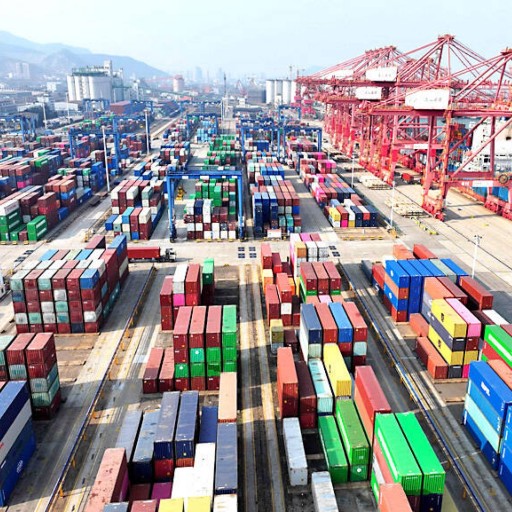
The underlying causes of the strained consumption chain: global structural transformation
The decline in Chinese exports is not just a Chinese issue, but a reflection of the fragmentation of the global consumption chain.
1. Inflation and high interest rates are compressing global consumption capacity
Since 2022, Europe and the US have continuously raised interest rates to combat high inflation, maintaining them at historical highs in 2023–2024. The US federal funds rate has remained at 5.25%–5.5%, while the European Central Bank has kept rates above 4% for an extended period.
This monetary tightening policy has increased credit costs, suppressing consumer spending intentions, particularly for durable goods and non-essential consumer goods.
Data shows that the total credit card debt in the US has exceeded 1.3 trillion US dollars, the household savings rate is at a ten-year low, and the consumer confidence index has dropped to its lowest level since the pandemic in 2020. This directly impacts the “end-consumer supply chain” with China as its primary source of supply.
2. Deglobalization and the restructuring of supply chains toward localization
Led by the United States, developed economies are actively pursuing “de-Chinaization” and “supply chain diversification” strategies, with manufacturing operations gradually shifting to countries like India, Mexico, and Vietnam. This means orders are being dispersed, and export markets are no longer heavily reliant on China.
For example, Apple has shifted some assembly orders to India, while apparel and footwear brands are increasingly focusing on Bangladesh and Vietnam. European and American retailers are establishing closer ties with emerging suppliers in Latin America and Southeast Asia.
This not only alters logistics and settlement structures but also weakens China's “central role” in the global consumer chain.
3. Inventory Cycle Imbalances and “Inflated” Order Phenomena
At the onset of the pandemic, overseas companies stockpiled goods due to supply chain tensions, leading to “inflated inventory levels.” After entering 2023, demand recovery fell short of expectations, with inventory reduction becoming the main focus, thereby compressing the scale of new orders for China.
Many Chinese export-oriented enterprises reported that order cycles have shortened, order amounts have decreased, and “small, quick-turnaround orders” have replaced “large-volume bulk orders,” making cash flow management more challenging and reducing profitability.
Financial implications of export declines: capital, exchange rates, and manufacturing confidence
As one of China's three major economic engines, fluctuations in exports directly impact the financial system and capital markets. The decline in exports has triggered a series of chain reactions:
1. Pressure on the RMB exchange rate
In 2024, the RMB exchange rate against the US dollar continued to weaken, briefly breaking below the key 7.3 threshold. The decline in exports means reduced dollar inflows, leading to an imbalance in foreign exchange supply and demand, which further exacerbates depreciation pressure on the RMB.
Although the central bank has intervened multiple times (such as through forward foreign exchange sales and counter-cyclical factors), market confidence remains weak, resulting in increased exchange rate volatility in the short term.
For export companies, while depreciation enhances price competitiveness, it also creates pressure on importing raw materials and repaying dollar-denominated debts.
2. Manufacturing investment confidence is undermined
Weak foreign trade orders directly impact companies' willingness to expand production, with manufacturing fixed-asset investment growth falling to its lowest level in nearly three years in the first quarter of 2024. Financing demand from small and medium-sized export companies has declined, and banks have become more cautious in extending credit to related industries.
Some regions are beginning to see a trend toward “asset-light” operations and shifting to domestic sales among export-oriented factories, while more companies are considering setting up factories overseas, exacerbating concerns about the hollowing out of China's domestic manufacturing sector.
3. The “export logic” in the stock market is being reevaluated
In the A-share and Hong Kong stock markets, sectors such as home appliances, textiles, light industry, and port transportation have seen net foreign capital outflows. In contrast, sectors driven by domestic demand, technological self-reliance, and energy transition are more popular.
The capital market is gradually moving away from an “export-oriented valuation system” and shifting toward seeking new logic based on “high-quality development” and “safe manufacturing.”
How is China responding? Policy shifts and industrial breakthroughs proceed in parallel
Facing this round of export challenges, China has not remained idle. Both policy and corporate levels are accelerating their responses.
1. Expanding domestic demand to drive the domestic cycle and offset export pressures
The central government has repeatedly emphasized that "domestic circulation is the main, with domestic and international cycles mutually reinforcing each other.” Specific measures include:
Promoting the renewal consumption of durable goods such as automobiles and home appliances;
Releasing infrastructure and urban renewal demand in central and western regions;
Increasing support for new areas such as digital consumption and green consumption.
By building a stronger domestic demand system, time and space are created for export enterprises to transition.
2. Supporting enterprises to establish overseas factories and reshape their global supply chain status
At the national level, export enterprises are encouraged to “go global” by entering target markets through direct investment, joint ventures, and mergers and acquisitions, achieving “local manufacturing and local sales.”
Especially in RCEP, Africa, the Middle East, and “Belt and Road” countries, Chinese companies are actively building overseas production networks, shifting from “selling products” to “building ecosystems.”
3. Developing high-end manufacturing and technology exports
Weak exports are driving industrial upgrading. Exports in high-tech fields such as new energy vehicles, photovoltaic equipment, batteries, and industrial robots are growing against the trend, becoming new drivers of foreign trade.
Chinese manufacturing is transitioning from “low value-added + large-scale production” to “high value-added + technology-intensive,” aiming to mitigate the impact of the decline in traditional supply chains.
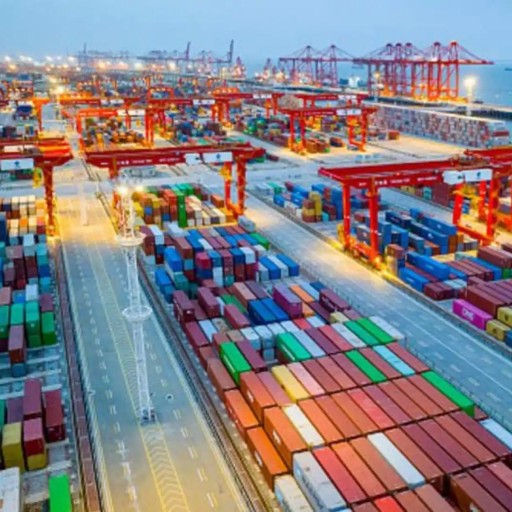
Global Perspective on “Supply Chain Disruption”: New Landscape and Potential Opportunities
Behind China's export decline lies a profound adjustment in the global supply chain landscape. This “supply chain loosening” presents new challenges to the global economy:
1. Cost efficiency will be re-evaluated
“Made in China” became the world's factory due to its unique advantages in cost, scale, logistics, and policy. Once supply chain diversification progresses, global manufacturing costs will rise across the board, increasing the risk of inflationary pressures.
This poses a significant challenge for developed countries already grappling with inflationary pressures.
2. The consumption chain is shifting from “extreme globalization” to “regional networking”
Future consumption chains will prioritize geopolitical security, regional industrial closed loops, and cultural compatibility. Multinational corporations will no longer pursue efficiency alone but will increasingly consider stability and strategic depth.
This presents development opportunities for emerging economies outside China and provides a window for China's “smart manufacturing upgrade.”
3. Reconstructing investment logic: shifting from a chain-based layout to a node-based layout
For capital markets, the global consumption chain is no longer “a single channel” but “multiple breakpoints” . Investors should focus on:
Which segments hold key technologies?
Which countries have complete ecosystems?
Which companies have the flexibility to adapt?
China's slowing exports present a challenge, but they also force the global community to seek new “chain leaders” or build more “chains within chains” within regions.
China's declining exports have indeed caused significant disruptions to the global consumer supply chain. However, it is also important to recognize that this is a global transition from “extreme efficiency” to “strategic stability.”
The past global consumer supply chain relied on China's manufacturing as a “unilateral strong binding” model, but the future may evolve toward a “networked structure” characterized by multiple centers, multiple tiers, and multiple technologies.
If China can achieve manufacturing upgrades, market expansion, and global repositioning through this process, it may find its own new role in this supply chain transformation.
In other words, the “decline in exports” may not be the end of the breakdown but rather the beginning of a new reshaping.
 1
1 1
1OTHER NEWS
-
- Should you Choose a Real Estate Agent When Buying a Home?
- By Wendy 24 Apr,2023

-
- Trump reignites tariff war, global supply chains face another shakeup
- By ZXY 28 Jul,2025
-
- How much longer can the eurozone hold out? The ECB has reached the end of its rate hike cycle
- By ZXY 01 Aug,2025

-
- How to Avoid Being Scammed by Credit Card Fraud!
- By Wendy 24 Apr,2023

-
- Credit card points and rewards seem cost-effective, but they actually hide these traps
- By ZXY 01 Sep,2025

-
- How do I Choose Between Selling my Home and Renting it out?
- By Wendy 24 Apr,2023

-
- Global manufacturing is slowing down in tandem. When will deflation strike?
- By ZXY 01 Aug,2025

-
- With China's exports declining, is the global consumption chain beginning to break?
- By ZXY 31 Jul,2025
-
- Fixed deposits are not as good as flexible financial management? Analysis of financial management trends in 2025
- By ZH 24 Jul,2025

-
- High-yield stocks vs. growth stocks: Which type of investment is more resistant to risks? A game of wealth defense and offense
- By ZH 23 Jul,2025

-
- Why Do Most People Overlook “Cash Flow Risk”?
- By ZXY 11 Oct,2025

-
- The widening U.S. fiscal deficit is fueling debt concerns
- By ZXY 30 Jul,2025