Super lottery craze: How does lottery affect the national economy?
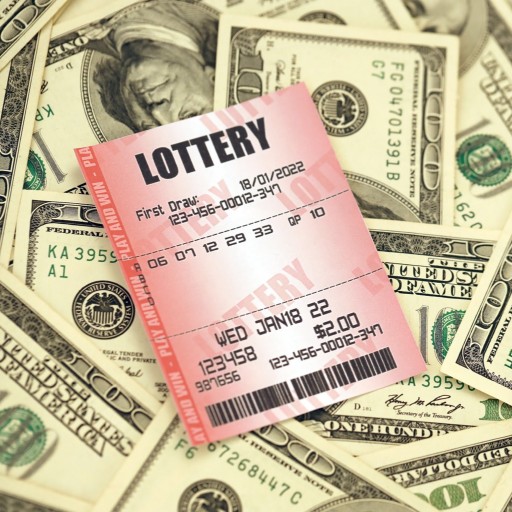
In some countries, lottery sales even exceed the total of movie box office, music and video game industries. Why are so many people flocking to it? Because lottery creates an illusion of "common people turning over" - as long as you spend a few dollars, you have the opportunity to get rid of poverty and enter the elite class. Who wouldn't be tempted?
1. The golden temptation of lottery: Not everyone is "playing"
The global lottery market is expanding at an alarming rate. According to statistics, the annual lottery sales in the world exceed 300 billion US dollars, and the annual sales in the United States alone exceed 100 billion US dollars. In some countries, lottery sales even exceed the total of movie box office, music and video game industries.
Why are so many people flocking to it? Because lottery creates an illusion of "common people turning over" - as long as you spend a few dollars, you have the opportunity to get rid of poverty and enter the elite class. Who wouldn't be tempted?
However, most people who buy lottery tickets do not become billionaires, they just pay the "entrance fee" for this dream. In fact, the real winner is not always the player, but the government's financial system itself.
2. The money machine behind the lottery: the government's "invisible tax"
Although the lottery seems to be a voluntary entertainment activity, economists often call it a "tax on the poor." Why do you say that? Because data show that the proportion of low-income people betting on lottery tickets is significantly higher than that of middle- and high-income groups.
They are eager to change their fate and are willing to continue to invest in tiny hopes, and these funds are continuously injected into the national finances.
Taking the United States as an example, about 30%-50% of lottery sales revenue flows directly into the government or specific public funds. This money is usually used for social projects such as education, public construction, and elderly welfare.
On the surface, this is undoubtedly a kind of return to society. But if you go deeper, you will find that it is actually the poor who unknowingly subsidize the entire public system.
3. The double-edged sword effect of the lottery economy
Economic benefits:
Increase fiscal revenue: Lottery provides a stable and relatively uncontroversial source of funds for the government, especially in times of fiscal tension or insufficient tax revenue, the existence of lottery relieves huge pressure.
Create employment opportunities: From lottery centers, retail outlets, advertising companies to technical support, the lottery industry chain provides thousands of jobs for the market.
Drive consumption: Holiday promotions, special prize pools, and live TV broadcasts all stimulate people's desire to consume and indirectly promote the development of the retail industry.
Economic risks:
Imbalance in wealth redistribution: Although lotteries have created a few wealthy people, they have sucked away the wallets of a large number of low-income people, affecting the consumption structure and forming a vicious circle of "the lower class supporting the upper class".
Spread of gambling culture: Long-term addiction to lotteries may breed a gambling mentality, leading to imbalanced financial behavior, and even causing social problems such as family breakdown and heavy debt.
Risk of economic bubble: When a society places too much hope on "probability games", the vitality of the real economy may be weakened, forming a short-sighted view of wealth.
4. "Lottery National Strategy" from an international perspective
Different countries have very different attitudes towards lotteries. Nordic countries such as Finland and Sweden use rigorous legal supervision of lottery operations to ensure that the flow of public welfare funds is transparent and reasonable. Some developing countries use lotteries to quickly raise funds for large-scale infrastructure or social security system construction.
China's lottery market is also huge, consisting of two major systems: "welfare lottery" and "sports lottery". According to statistics, China's annual lottery sales have exceeded 500 billion yuan, and the funds are mainly used in the fields of disabled people, education, elderly care, and medical care.
However, in recent years, corruption and regulatory loopholes have been frequently exposed, causing the public to question the public welfare of lottery.
5. When lottery becomes an "addictive drug" for the economy
The most worrying thing is that lottery is becoming a financial dependence of some governments. In other words, lottery is not only the spiritual sustenance of the people, but also a "painkiller" for the national budget. Once lottery sales decline, some public projects may face suspension.
Furthermore, if the government begins to over-promote and market lottery in order to make up for the budget deficit, or even weaken the difficulty of winning to attract more bettors, it may go to the abyss of "national gambling".
6. Conclusion: How should we view this craze?
Lottery is not a flood or a miracle. It is a double-edged economic tool that can boost finances and benefit society, but it can also empty wallets and mislead cognition. The key lies not in the lottery itself, but in how the system is designed, how the government regulates, and how the public perceives it.
Next time when we stand in front of the counter of a convenience store and stare at the lottery ticket with colorful patterns, why not stop for a few seconds and ask ourselves: Is this a "try to turn a bicycle into a motorcycle" or a donation to other people's city subways?
May all those who place their hopes not only have the courage to dream, but also the wisdom to see the reality clearly.
 1
1 1
1OTHER NEWS
-
- How much longer can the eurozone hold out? The ECB has reached the end of its rate hike cycle
- By ZXY 01 Aug,2025
-
- Is German manufacturing losing its edge? The latest casualty of the US-China strategic rivalry
- By ZXY 29 Jul,2025
-
- Trump reignites tariff war, global supply chains face another shakeup
- By ZXY 28 Jul,2025
-
- Credit card points and rewards seem cost-effective, but they actually hide these traps
- By ZXY 01 Sep,2025

-
- Fixed deposits are not as good as flexible financial management? Analysis of financial management trends in 2025
- By ZH 24 Jul,2025

-
- Yield Curve Inversion Resurfaces: Is There Still Hope for a Soft Landing in the U.S. Economy?
- By ZXY 31 Jul,2025
-
- How do I Choose Between Selling my Home and Renting it out?
- By Wendy 24 Apr,2023

-
- With China's exports declining, is the global consumption chain beginning to break?
- By ZXY 31 Jul,2025
-
- Why Do Most People Overlook “Cash Flow Risk”?
- By ZXY 11 Oct,2025

-
- How much longer can the seven tech giants of the US stock market withstand high interest rates?
- By ZXY 28 Jul,2025
-
- The widening U.S. fiscal deficit is fueling debt concerns
- By ZXY 30 Jul,2025
-
- Who is the Primary Lender When Applying for a Home Loan? These Points are Important!
- By Little Grapes 24 Apr,2023