Fixed deposits are not as good as flexible financial management? Analysis of financial management trends in 2025
Against the backdrop of the global economy gradually emerging from the shadow of high inflation and frequent adjustments in interest rate policies, the financial management trend in 2025 has quietly changed.
In the past, people used to put money into fixed deposit accounts and enjoy "stable happiness"; but now, more and more investors are beginning to question: Are fixed deposits really safe? Are the returns really worth it? Are there more flexible and growth-oriented alternatives?
This year, the keywords in the financial market are: flexibility, intelligence, and decentralization. Fixed deposits are still the favorite of conservative investors, but under the impact of changes in the macro environment and the rise of new tools, it is being quietly overtaken by flexible financial management products.
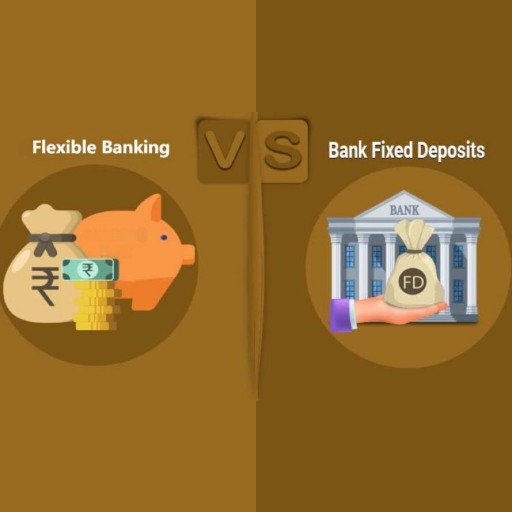
Let's systematically disassemble: Fixed deposits VS flexible financial management, how should you choose in 2025?
1. The interest rate advantage is no longer: the "stability" of fixed deposits is being swallowed up
In low-interest countries such as Japan, parts of Europe, and the United States and Canada where the interest rate cut cycle has restarted, the interest rate of traditional bank fixed deposits generally remains between 1% and 2%**. Although it is still slightly better than current deposits on the surface, it is almost "unbeatable" compared with the inflation rate.
More importantly, the longer the lock-in period, the more difficult it is to cash out. If you choose a 3-year or 5-year fixed deposit, once you need money in the middle, early withdrawal is not only troublesome, but also leads to interest loss. In an uncertain era, this rigid constraint is increasingly inappropriate.
Trend signal: According to a report by the international financial advisory agency IFIA, by the end of 2024, more than 42% of personal assets will flow to more flexible financial products, such as money market funds, bond portfolios that can be redeemed at any time, and short-term mixed investment tools.
2. The rise of flexible financial management: stable returns and better liquidity
In 2025, flexible financial management will no longer be exclusive to a few elite investors, but will become an important option for mass wealth management. Most of these products have the following features:
Daily/weekly redemption mechanism: funds can be flexibly transferred in and out to meet emergency needs;
Floating returns but clear risk control: annualized returns can reach 3~5%, higher than most fixed deposit rates;
Various investment scopes: including short-term bonds, credit bonds, high-quality corporate bills, REITs, etc.;
Some products come with a principal protection mechanism: even if the market fluctuates, the principal is guaranteed not to be lost.
In addition, the development of technology finance has also made flexible financial management more "intelligent". With the help of AI algorithms, many platforms will intelligently match the most suitable investment portfolio based on the user's risk preference, funding goals and time planning. One-click configuration and automatic position adjustment have greatly reduced the investment threshold.
3. Fixed VS flexible: What should you choose in 2025?
If you pursue 100% security, have low requirements for returns, and can accept that the funds cannot be used for 3~5 years-fixed deposits are still suitable for you.
If you want funds to be available at any time, stable and considerable returns, and stronger anti-inflation capabilities, then flexible financial management is undoubtedly the best choice.
For most ordinary families, it may be more sensible to reasonably combine the two.
Allocating a portion of assets as "reserve funds" to short-term fixed deposits (such as 3 months to 6 months), while the remaining available funds are invested in flexible financial management or short-term bond funds and monetary products, which not only preserves and increases value, but also takes into account liquidity and flexibility.
4. Global Trends: The era of de-banking has quietly arrived
In the United States, digital banks and FinTech companies are subverting traditional finance. "High-yield savings accounts" and "automatic financial management plans" launched by platforms such as Chime, SoFi, and Robinhood have attracted tens of millions of young users.
Users can enjoy an annualized return of 4% to 5% liquidity without binding traditional bank accounts, far exceeding traditional fixed deposits.
In Europe, digital banks such as Revolut and N26 have also occupied the "new entrance" of user asset allocation through flexible financial products.
In Asia, investors in Singapore, Hong Kong, Taiwan and other places have turned to combined financial services in large numbers, integrating funds, bonds, insurance financial management, and ETFs into the same account for management, achieving a dual increase in flexibility and returns.
The conclusion is clear: the money of the future is moving away from fixed deposits and flowing to more flexible and smarter "digital financial products."

5. Financial management tips for 2025: Flexible allocation is the way to go
Set up an emergency fund account: It is recommended to keep 3 to 6 months of living expenses as emergency funds, and choose current or short-term deposits;
Diversify investment portfolios: Don’t “go all in” and invest all in a certain product. Allocating bonds, REITs, and index funds can effectively diversify risks;
Pay attention to monetary policy trends: 2025 will still be a year of frequent interest rate adjustments, and reasonable adjustments are more important than “holding on”;
Use platform tools: Use smart financial management APP and automated investment tools to reduce human operational errors;
Regular review and adjustment: Evaluate your investment portfolio once a quarter, and flexibly adjust according to market changes to avoid funds “sleeping”.
Conclusion: Don’t let your money “wait and see” anymore
Times are changing, and the logic of financial management is also changing. Fixed deposits that were once as stable as Mount Tai may now become a “stumbling block” to asset growth. In 2025, whoever can find the best balance between risk and return will be able to go further on the road to wealth in the future.
It is better to let go of the obsession with tradition, try to dance with smart financial management, and embrace a more flexible and warmer financial future.
 1
1 1
1OTHER NEWS
-
- Do small businesses really need tax services? When can they file their own taxes?
- By YCY 27 Jan,2026

-
- What do you Mean by Mortgage? What Does it Mean to Have a Mortgage?
- By Little Grapes 24 Apr,2023

-
- How much longer can the eurozone hold out? The ECB has reached the end of its rate hike cycle
- By ZXY 01 Aug,2025
-
- Real Estate Investment Needs to be Careful!
- By Little Grapes 24 Apr,2023

-
- Should you Choose a Real Estate Agent When Buying a Home?
- By Wendy 24 Apr,2023

-
- Who is the Primary Lender When Applying for a Home Loan? These Points are Important!
- By Little Grapes 24 Apr,2023

-
- How to Effectively Manage Debt: Strategies for Balancing Payments and Savings
- By YCY 07 Jan,2026

-
- How do I Choose Between Selling my Home and Renting it out?
- By Wendy 24 Apr,2023

-
- Fixed deposits are not as good as flexible financial management? Analysis of financial management trends in 2025
- By ZH 24 Jul,2025
-
- With China's exports declining, is the global consumption chain beginning to break?
- By ZXY 31 Jul,2025

-
- High-yield stocks vs. growth stocks: Which type of investment is more resistant to risks? A game of wealth defense and offense
- By ZH 23 Jul,2025

-
- Mobile phone is the bank: one-click account opening, one-click financial management, digital financial life is coming
- By ZH 24 Jul,2025