Global interest rates: What does a rate hike mean to you?
In economic news, "rate hike" is undoubtedly one of the most frequently used words in recent years. From the Federal Reserve to the European Central Bank, from the Bank of England to the Bank of Canada, many major economies around the world have raised their benchmark interest rates, forming a strong "tightening whirlwind".
However, when you see terms such as "25 basis points interest rate hike" and "interest rates rise to a ten-year high" in the news, have you ever thought: What does this have to do with me? Is it just a topic for economists, or is it the key to directly affecting your and my life?
1. What is an interest rate hike? Why are interest rates being raised around the world?
In simple terms, interest rates are the "cost of borrowing money". When the central bank raises interest rates, it is actually raising the interbank lending rate, which affects the bank's loan interest rate to individuals and businesses. The core reason why central banks around the world collectively raise interest rates is one word: inflation.
In the past few years, the epidemic has caused supply chain disruptions, the government's large-scale stimulus policies have brought too much money, and the war has caused energy prices to rise. These factors have intertwined and pushed the world into a wave of fierce inflation.
In order to curb price increases, the central bank has to "put on the brakes" by raising interest rates - raising interest rates will make borrowing more expensive and consumption more cautious, thereby easing inflationary pressure.
2. Five major impacts of interest rate hikes on your life
Mortgage families: repayment pressure has risen sharply
If you are a person who buys a house with a loan, then you may feel the most direct impact. Especially in countries such as the United States, the United Kingdom, and Australia, where floating-rate mortgages are more common, repeated interest rate hikes mean that monthly mortgage bills are rising.
For example, a person in the United States who borrows $300,000 and has an interest rate of 4% has a monthly payment of about $1,432; when the interest rate rises to 7%, the monthly payment becomes $1,996, a full increase of $564 per month. This difference is living expenses, education funds, and even a family's travel budget for many families.
Credit cards and consumer loans: interest swallows your wallet
The interest rate hike not only affects mortgages, but also makes the costs of credit cards, car loans, consumer loans, etc. "rise with the tide". In an environment of rising interest rates, if you still maintain a high-consumption, high-debt lifestyle, you are likely to fall into the dilemma of "paying only interest but not principal".
Therefore, the best thing to do at this time is not to "buy, buy, buy", but to "cut, cut, cut" - cut unnecessary expenses, cut high-interest loans, and cut excessive credit dependence.
Deposits and financial management: interest rate returns have become more attractive? Beware of traps!
The good news is that for savers, interest rate hikes have gradually raised deposit rates. Banks, money funds, and short-term bonds have begun to show a "long-lost" annualized rate of return of 3% to 5%, which seems to be a good conservative investment option.
But don't rush to "ALL IN". Don't forget that inflation still exists. If your actual rate of return (nominal interest rate minus inflation) is still negative, then your so-called "value preservation" is actually "shrinkage". The smart thing to do is to dynamically adjust your investment portfolio, such as adding inflation-resistant assets such as physical assets, gold, high-quality stocks or REITs.
Employment market: The wave of corporate cost reduction and layoffs may intensify
When financing costs rise and consumption slows down, corporate profit pressure will also increase. Some technology companies that originally relied on "burning money to expand" were the first to bear the brunt, and news of large-scale layoffs and frozen recruitment was everywhere. Even traditional industries have begun to control spending by "optimizing the structure."
For workers, this means a decline in job security, difficulty in salary increases, and fierce competition. In such an economic cycle, continuous learning, improving skills, and maintaining workplace adaptability have become more important than ever.
Global market: stock market volatility, bond market recovery, and emerging markets under pressure
The impact of the interest rate hike cycle on the global capital market is also multi-dimensional. First of all, the stock market usually adjusts due to rising corporate financing costs and lower valuations, especially high-valuation growth stocks are hit harder.
The bond market shows the characteristic of "the higher the interest rate, the lower the price", but as the interest rate approaches the top, bonds have ushered in more attractive returns. At the same time, emerging markets are also facing great challenges due to currency depreciation and capital outflows.
In other words, investors must be more sensitive to macro signals and know how to "follow the trend" rather than "hold on against the current".
3. Interest rate hikes are not forever, the key lies in how to plan for the future
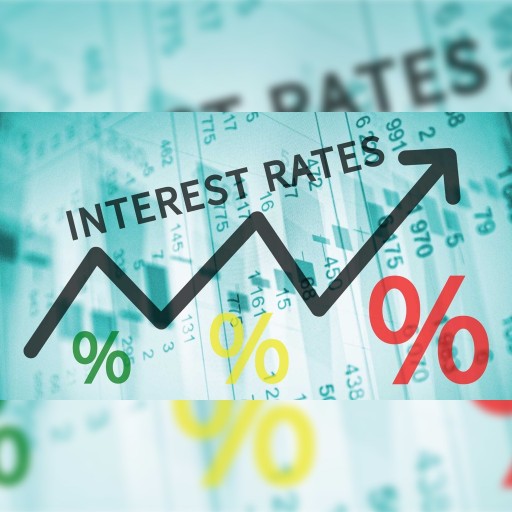
It is worth mentioning that interest rates will not rise forever. Every interest rate hike cycle will eventually usher in a turning point of "interest rates peaking" or even "turning to interest rate cuts". At present, many economies around the world have shown signs of slowing economic growth, and the market has begun to expect an interest rate turning point in the next 12-18 months.
So the question is, how should you plan ahead?
Diversify asset allocation: Don't put all your eggs in one basket, and make a reasonable combination of stocks, bonds, gold and cash.
Reduce unnecessary debt: Especially high-interest debt, it must be repaid first.
Focus on cash flow and stability: Both individuals and enterprises should establish sufficient liquidity reserves.
Counter-cyclical investment thinking: When others panic, you should stay calm; when the market is sluggish, it is often a good time to sow.
Conclusion: Understanding interest rates is understanding the future
Interest rate hikes are not a distant macro term, but an "invisible driver" of everyone's life. It affects your mortgage, car loan, income, investment, and future quality of life. The more complex the economic cycle, the more everyone needs to have basic financial awareness, understand interest rates, see trends, and keep wealth.
As an investment motto says: "The market is always volatile, and smart people have already prepared for a rainy day." At the moment when the interest rate hike trend is not over, are you ready to stand firm, make rational decisions, and escort your financial future?
 1
1 1
1OTHER NEWS
-
- How do I Choose Between Selling my Home and Renting it out?
- By Wendy 24 Apr,2023

-
- High-yield stocks vs. growth stocks: Which type of investment is more resistant to risks? A game of wealth defense and offense
- By ZH 23 Jul,2025

-
- Yield Curve Inversion Resurfaces: Is There Still Hope for a Soft Landing in the U.S. Economy?
- By ZXY 31 Jul,2025
-
- With China's exports declining, is the global consumption chain beginning to break?
- By ZXY 31 Jul,2025

-
- Global manufacturing is slowing down in tandem. When will deflation strike?
- By ZXY 01 Aug,2025
-
- How to Effectively Manage Debt: Strategies for Balancing Payments and Savings
- By YCY 07 Jan,2026

-
- Trump reignites tariff war, global supply chains face another shakeup
- By ZXY 28 Jul,2025

-
- Gold surges to a new all-time high—what are investors afraid of?
- By ZXY 29 Jul,2025
-
- "Buy Now, Pay Later" is changing the consumer finance landscape: a payment revolution spreading around the world
- By ZH 25 Jul,2025

-
- Watch out for the Following Credit Card Scams!
- By Wendy 24 Apr,2023

-
- How much longer can the seven tech giants of the US stock market withstand high interest rates?
- By ZXY 28 Jul,2025
-
- Do small businesses really need tax services? When can they file their own taxes?
- By YCY 27 Jan,2026