Gold surges to a new all-time high—what are investors afraid of?
Since the beginning of 2025, international spot gold prices have continued to rise, breaking through the $2,400 per ounce mark and setting a new record. In an era defined by interest rates and AI, why has gold's role as a “traditional safe haven” once again gained favor among investors?
What are investors truly afraid of behind this surge in gold prices? Is it inflation, geopolitical tensions, or systemic financial risks?
Gold's rise is never an isolated event. It is a mirror reflecting collective anxiety, an instinctive reaction from investors in an era of uncertainty.
Why has gold reached a new all-time high at this time?
1. Extremely uncertain macroeconomic environment
From the second half of 2024 to early 2025, the global economy entered a new phase of “high interest rates + low growth.”
Although the Federal Reserve has paused its rate hikes, inflation remains unchecked, with the policy rate still above 5%; the European economy continues to weaken, China's economic recovery remains unstable, and emerging market debt crises occasionally surface, leading to widespread concerns that the global economy may fall into a “stagflation” state.
In this environment, gold, as an asset that hedges against inflation and systemic risks, naturally becomes the “safe anchor” in asset allocation.
2. Frequent geopolitical risks
The Russia-Ukraine war has not yet subsided, tensions in the Middle East have escalated again, and disruptions to Red Sea shipping have disrupted global logistics; simultaneously, U.S.-China relations remain in a “confrontational yet stable” state, and the uncertainty surrounding the 2025 U.S. presidential election keeps the market highly vigilant.
Any escalation of geopolitical conflicts would prompt capital to flow back into safe-haven assets like gold.
Data shows that whenever wars or conflicts escalate, gold prices surge sharply in the short term. Over the past year, central banks worldwide (especially those in emerging markets) have continued to increase their gold reserves, driven by the dual defense against geopolitical and monetary sovereignty risks in the context of “de-dollarization.”
3. Subtle Changes in the Dollar's Status
Although the U.S. Dollar Index remains at relatively high levels, its hegemonic foundation is beginning to weaken.
On one hand, the US national debt has surpassed 34 trillion dollars, sparking market concerns about fiscal sustainability; on the other hand, an increasing number of countries are beginning to experiment with trade settlements in renminbi, euros, or their own currencies, eroding the dollar's dominance in settlement transactions.
Gold is thus once again viewed as the quintessential non-credit asset, serving as the ultimate weapon against currency devaluation and credit risks.
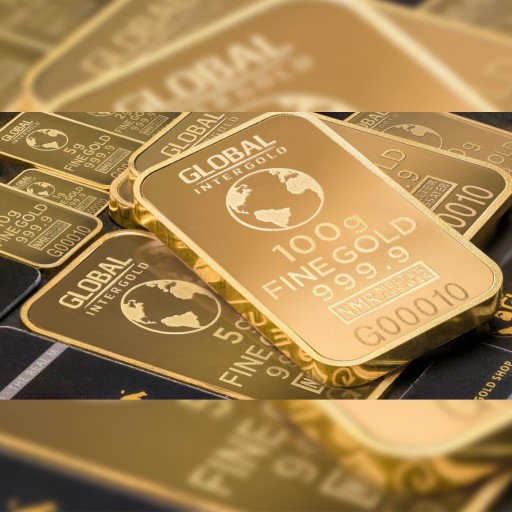
What are investors truly “fearing”?
The rise in gold prices is not driven by greed but by “deep-seated fear.” What investors are currently worried about goes far beyond a single risk; it is a series of intertwined systemic issues:
1. Fear of inflation “resurging”
Although inflation indicators such as the CPI and PCE have declined, service prices remain sticky, and essential expenses like rent, healthcare, and education continue to run at high levels. Gold has historically been viewed as a “hard asset” to counter inflation, and investors fear that if inflation rebounds, the Federal Reserve's resumption of interest rate hikes could once again trigger market turmoil.
Historically, during the stagflation period of the 1970s, gold prices surged from $35 to $850, a rise of over 20 times, becoming a classic case of inflation hedging.
2. Fear of financial system instability
Between 2023 and 2024, a series of small and medium-sized bank failures occurred in Europe and the US, sparking doubts about bank liquidity and the effectiveness of financial regulation. Although the crisis did not escalate further, concerns about the fragility of the financial system continue to grow. In this context, gold is seen as the ultimate “risk-free” asset.
Especially for large institutional investors, gold is not only a safe-haven asset but also a “insurance policy.”
3. Fear of the eventual bursting of the tech bubble
In 2024, the “Big Seven” US stocks continued to rise, with tech stocks like Nvidia, Microsoft, and Tesla hitting new highs in valuation. However, many investors began to question whether the AI boom could sustain such high price-to-earnings ratios.
If the tech sector experiences a systemic correction, it could trigger a wave of asset rebalancing, with gold emerging as a natural beneficiary.
This also explains why a significant amount of ETF funds have flowed into the gold sector in recent months: institutional investors are beginning to position themselves for a “Plan B” in case AI cools down.
What are central banks buying? The nation's risk-hedging logic
Unlike the gold buying driven by individuals and funds over the past decade, this round of gold price increases has a notable feature: central banks are the most steadfast buyers.
From 2022 to 2024, central banks worldwide have continuously increased their gold reserves for three consecutive years, setting a post-Cold War record high. Among them, emerging economies such as China, India, Russia, Poland, and Turkey have been particularly proactive.
Why have these countries suddenly “fallen in love with gold”? There are at least three underlying logics:
De-dollarization: To avoid U.S. financial sanctions and SWIFT risks, central banks need to allocate non-dollar assets;
Foreign exchange diversification: Under geopolitical uncertainty, gold, as a “sovereign-neutral, cross-border, and anonymous” reserve asset, offers greater strategic security;
Domestic currency stability strategy: When the domestic currency faces exchange rate pressure, gold reserves can serve as a market confidence anchor to stabilize the foreign exchange market.
Central banks' actions have significantly influenced market expectations for gold's medium- to long-term outlook, driving a trend of rising gold prices.
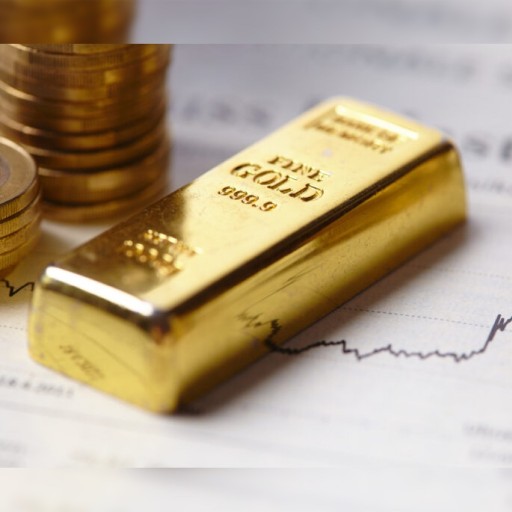
Does gold still hold investment value?
Given that gold prices are currently at historical highs, should investors still allocate to gold?
The answer is not straightforward.
Three categories of investors suitable for allocation:
Long-term risk-averse investors: used to hedge systemic risks in asset portfolios, typically accounting for 5%–10%;
Those who distrust the fiat currency system: holding gold as an ultimate credit substitute asset;
Those bearish on the US dollar or US Treasuries: gold as a “counterpart to the US dollar,” with upside potential when US dollar credit weakens.
Risk warnings:
Gold does not generate interest or dividends, resulting in high opportunity costs, especially in a high-interest-rate environment;
Gold prices are susceptible to market sentiment fluctuations, posing short-term “overheating correction” risks;
If future U.S. inflation is fully contained, the dollar strengthens, and interest rates remain elevated, the logic behind gold's upward trend will be challenged.
Therefore, gold allocation should be viewed as a “risk hedging tool” rather than a primary source of returns, with the key focus on its “insurance” attributes.
Outlook: How much longer will gold rise?
From a fundamental perspective, the gold bull market has not yet ended, but it is also unlikely to rise indefinitely. Future trends will depend on the following key variables:
1. Federal Reserve policy direction
If the Federal Reserve cuts interest rates as expected in the second half of 2025, this may further boost gold prices; conversely, if it maintains high interest rates for longer or tightens policy again, this may temporarily suppress gold prices.
2. Geopolitical Developments
The situations in hotspots such as the Middle East, Russia-Ukraine, the Taiwan Strait, and the South China Sea are the largest “black swan variables” behind gold prices. Any escalation of events could serve as a catalyst for gold.
3. Global Financial Stability
If stock or bond markets experience significant volatility, gold, as a “safe-haven asset,” will continue to benefit. However, if markets gradually stabilize and risk appetite improves, capital may flow out of gold and back into risk assets.
Every major rally in gold prices has never been merely a fluctuation in commodity prices but a reflection of global market sentiment. What is it rising on? It is rising on global investors' anxiety about the future. What are they afraid of? They are afraid of the breakdown of a familiar system and the end of an old order.
In this era of high interest rates, rising risks, and policy uncertainties, gold is not the answer but a stance: it reminds us that uncertainty is the norm of this era, and the logic of asset allocation must keep pace with the rhythm of change.
 1
1 1
1OTHER NEWS
-
- Do small businesses really need tax services? When can they file their own taxes?
- By YCY 27 Jan,2026

-
- What do you Mean by Mortgage? What Does it Mean to Have a Mortgage?
- By Little Grapes 24 Apr,2023

-
- How much longer can the eurozone hold out? The ECB has reached the end of its rate hike cycle
- By ZXY 01 Aug,2025
-
- Real Estate Investment Needs to be Careful!
- By Little Grapes 24 Apr,2023

-
- Should you Choose a Real Estate Agent When Buying a Home?
- By Wendy 24 Apr,2023

-
- Who is the Primary Lender When Applying for a Home Loan? These Points are Important!
- By Little Grapes 24 Apr,2023

-
- How to Effectively Manage Debt: Strategies for Balancing Payments and Savings
- By YCY 07 Jan,2026

-
- How do I Choose Between Selling my Home and Renting it out?
- By Wendy 24 Apr,2023

-
- Fixed deposits are not as good as flexible financial management? Analysis of financial management trends in 2025
- By ZH 24 Jul,2025

-
- With China's exports declining, is the global consumption chain beginning to break?
- By ZXY 31 Jul,2025

-
- High-yield stocks vs. growth stocks: Which type of investment is more resistant to risks? A game of wealth defense and offense
- By ZH 23 Jul,2025

-
- Mobile phone is the bank: one-click account opening, one-click financial management, digital financial life is coming
- By ZH 24 Jul,2025