Global manufacturing is slowing down in tandem. When will deflation strike?
In the second half of 2024, global manufacturing sentiment indices remained depressed, with the manufacturing PMI of major economies such as the US, the Eurozone, China, and Japan mostly below the 50-point threshold. Declining orders, excess capacity, inventory buildup, and pressure on corporate profits have become common challenges for global manufacturing.
As a key leading indicator of the economic cycle, the synchronized slowdown in manufacturing often signals significant macroeconomic trends. Meanwhile, as commodity prices weaken, core inflation declines, and the labor market cools, concerns about the “deflationary specter” have resurfaced in global markets.
So, is deflation really on the horizon? If so, when will it fully materialize?
Global resonance of manufacturing slowdown: multiple factors at play, no one can remain unscathed
Manufacturing recessions are never isolated events but often occur during phases of global demand contraction, declining investment confidence, and inventory cycle reversals. The current slowdown exhibits distinct synchronous and structural characteristics:
1. Global PMI data remains persistently weak
United States: The ISM Manufacturing PMI fell to 48.6 in May 2024, marking the fourth consecutive month below the boom-bust line.
Eurozone: The Manufacturing PMI has lingered in the 45–47 range for an extended period, with Germany and France showing particularly weak performance.
China: The official Manufacturing PMI has repeatedly dropped to around 49, with export-oriented enterprises experiencing a significant decline in orders.
Japan and South Korea: Sluggish manufacturing recovery due to declining demand from China and the US.
2. Systemic declines across major industry chains
Electronics and semiconductors: Weakening demand for smartphones, PCs, and displays has led TSMC and Samsung to reduce capacity utilization rates.
Automotive manufacturing: High interest rates have led to rising credit costs, while the phasing out of electric vehicle subsidies and inventory pressures have slowed sales growth.
Machinery and equipment: Corporate capital expenditures have decreased, with significant declines in orders for high-end equipment, machine tools, and sensors.
3. Declining raw material prices are dragging down upstream investment
Prices for commodities such as copper, iron ore, and crude oil have been generally weak since the end of 2023. Brent crude oil briefly fell below $75 per barrel, and copper prices also corrected by over 10%. This reflects insufficient physical demand, which in turn affects investment intentions in upstream industries such as mining, energy, and chemicals.
This global contraction in manufacturing means that both supply and demand are being impacted: companies have no incentive to expand production, consumers are unwilling to spend more, and the “heat” of economic activity is rapidly declining.

The true meaning of deflation: not “falling prices,” but “collapsing expectations”
Before determining whether deflation will occur, it is essential to clarify what true “deflation” entails.
Deflation is not merely a simple decline in prices but refers to a sustained decrease in the general price level, accompanied by weak demand, investment contraction, deteriorating employment, and credit tightening—a comprehensive and systemic economic downturn.
Its typical characteristics include:
CPI and PPI remaining negative or near zero for an extended period;
Continuous decline in corporate profits and stagnation in wage growth;
Decline in consumer spending and corporate investment intentions;
Rising real interest rates and increased debt burdens;
Escalating marginal ineffectiveness of monetary policy (liquidity trap).
Historically, Japan remained in a prolonged state of deflation from the late 1990s to the early 2010s; during the global financial crisis of 2008, the US and Europe also came close to the brink of deflation.
The greatest risk of deflation lies in the formation of “deflationary expectations”: once consumers and businesses believe that “goods will be cheaper in the future,” they will postpone consumption and investment, further depressing demand and triggering a spiral of economic decline.
Current signs of deflation have emerged but have not yet fully materialized
1. Weakening price indicators have become a trend
PPI remains negative: The Producer Price Index (PPI) for manufacturing powerhouses such as China, South Korea, and Germany has been in negative territory since 2023, indicating that profits in the upstream and midstream of the supply chain are being squeezed.
Core CPI has moderated: The US core CPI has declined from a high of 6.6% in 2022 to 3.4% in May 2024; the eurozone core inflation rate has fallen to 2.7%; China's CPI remains around 0%, with clear signs of weak consumer demand.
2. Global inventory cycle undergoing downward adjustment
Companies are beginning to reduce inventories due to “excess orders” during the pandemic, creating a short-term demand vacuum. If inventory restocking is delayed, it will continue to drag on upstream companies and investment spending.
3. Loose monetary liquidity has not translated into credit expansion
Taking China as an example, M2 growth has remained above 10%, but social financing growth and corporate credit demand have continued to decline, reflecting a “transmission blockage” in monetary policy; Credit spreads in the US are also widening, and banks' willingness to lend is declining.
This indicates that even though central banks are maintaining ample liquidity, the real economy is not receiving sufficient “blood,” reflecting the typical deflationary prelude of diminishing marginal effects from financial easing policies.
Global policy dilemma intensifies: ease or tighten? A dilemma
Faced with manufacturing slowdown and deflationary trends, traditional policy tools are facing challenges.
1. Federal Reserve: The tug-of-war between rate cut expectations and inflation targets
While falling inflation has given the Federal Reserve room to cut rates, core service prices remain elevated, and wage growth in high-paying industries has not slowed, prompting the Fed to hesitate in shifting toward easing too quickly.
If the Fed cuts rates too early, it could trigger a new round of asset bubbles; if it waits too long, the economy could be pushed into deflation. This dilemma is exacerbating market uncertainty.
2. Diverging Paths of the European Central Bank and the Bank of Japan
The European Central Bank slightly cut interest rates in June 2024 but simultaneously emphasized that “inflation remains a risk”; the Bank of Japan has begun to gradually exit its ultra-loose policy and is even considering raising rates.
This policy divergence complicates global capital flows and increases the difficulty of managing inflation expectations.
3. China: Structural Easing Insufficient to Offset Weak Aggregate Demand
Despite China's efforts to stimulate the economy through multiple “targeted rate cuts,” special bonds, and new infrastructure projects, private investment and consumer confidence have yet to fully recover. Real estate and local debt issues are constraining fiscal expansion, limiting the effectiveness of monetary policy stimulus.
The current policy tension between “stabilizing growth” and “managing risks” makes it difficult for China to fully “loosen the reins,” but if consumption and manufacturing investment cannot be effectively stimulated, deflationary pressures will remain difficult to reverse.
How would deflation impact global financial markets?
If deflationary expectations continue to intensify, they will have far-reaching implications for capital markets and the financial system:
1. The bond market may see a new round of “long-term bullishness”
In a deflationary environment, the downward trend in interest rates will accelerate, and long-term government bond yields will continue to decline. Global investors will increasingly favor allocating to medium- to long-term government bonds or risk-resistant bonds, with the bond market poised for strong performance.
2. The stock market's valuation system faces reassessment
Deflation implies weak corporate profit growth, particularly in cyclical industries such as manufacturing, retail, and construction, which will face the double blow of “profit contraction + stagnant revenue.”
Meanwhile, the high valuations of growth stocks are difficult to sustain in a deflationary environment, and the market will increasingly favor assets with stable cash flows and strong deflation-resistant capabilities, such as high-dividend utilities and core consumer stocks.
3. Gold and commodities may come under pressure
In a deflationary environment, commodity prices typically decline. While gold has safe-haven attributes, it may underperform if real interest rates rise. Only in an extreme scenario where “deflation and systemic financial risks” occur simultaneously would gold potentially see a strong rebound.
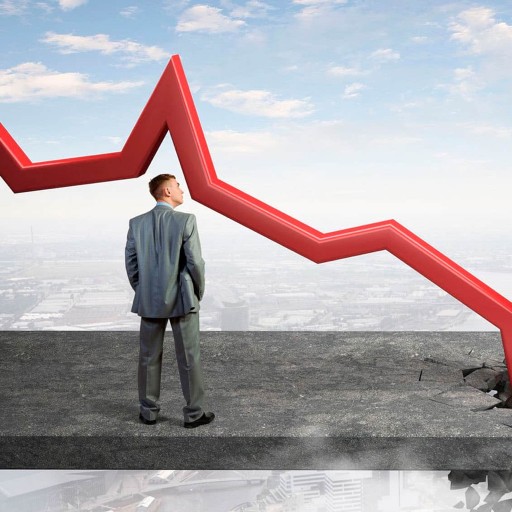
When will deflation strike? Perhaps after “expectations turn completely cold”
Although deflation has not yet fully erupted, if the following signals appear simultaneously, it may indicate that deflation is becoming a reality:
Global core CPI remains below 2% for 3–6 consecutive months, with service prices showing significant weakness;
Manufacturing PMI in various countries falls below 45 and remains there for several quarters;
Major economies experience “real negative interest rates” and a freeze in bank credit;
Corporate profits and employment data both weaken, and household savings rates surge sharply;
Financial markets anticipate policy ineffectiveness, and asset prices contract significantly.
The synchronized slowdown in global manufacturing is no longer merely a cyclical adjustment at the industrial level but may signal the global economy's entry into a low-inflation or even deflationary trajectory. It alerts us that the demand stimulus and monetary stimulus that were “over-drawn” during the pandemic are gradually being exhausted.
Deflation is not merely a decline in prices but a decline in confidence. Against the backdrop of increasingly constrained global policies, an aging population, and the peak of technological dividends, policymakers and investors must seriously consider the following question:
Before the next economic “winter” arrives, what actions can we take to ensure that the economy retains its warmth even in a low-temperature environment?
 1
1 1
1OTHER NEWS
-
- Do small businesses really need tax services? When can they file their own taxes?
- By YCY 27 Jan,2026

-
- What do you Mean by Mortgage? What Does it Mean to Have a Mortgage?
- By Little Grapes 24 Apr,2023

-
- How much longer can the eurozone hold out? The ECB has reached the end of its rate hike cycle
- By ZXY 01 Aug,2025

-
- Real Estate Investment Needs to be Careful!
- By Little Grapes 24 Apr,2023

-
- Should you Choose a Real Estate Agent When Buying a Home?
- By Wendy 24 Apr,2023

-
- Who is the Primary Lender When Applying for a Home Loan? These Points are Important!
- By Little Grapes 24 Apr,2023

-
- How to Effectively Manage Debt: Strategies for Balancing Payments and Savings
- By YCY 07 Jan,2026

-
- How do I Choose Between Selling my Home and Renting it out?
- By Wendy 24 Apr,2023

-
- Fixed deposits are not as good as flexible financial management? Analysis of financial management trends in 2025
- By ZH 24 Jul,2025

-
- With China's exports declining, is the global consumption chain beginning to break?
- By ZXY 31 Jul,2025

-
- High-yield stocks vs. growth stocks: Which type of investment is more resistant to risks? A game of wealth defense and offense
- By ZH 23 Jul,2025

-
- Mobile phone is the bank: one-click account opening, one-click financial management, digital financial life is coming
- By ZH 24 Jul,2025