As the ESG investment boom cools down, will green finance enter a cooling-off period?
In 2025, the global ESG investment field is experiencing an unprecedented "cooling-off wave". Morningstar data shows that in the first quarter of 2025, the net outflow of global ESG sustainable funds reached US$8.6 billion, far exceeding any period in history.
US investors have reduced their exposure to sustainable mutual funds and exchange-traded funds for the tenth consecutive quarter, and a similar trend has also emerged in the European market. At the same time, green finance, as an important carrier of ESG investment, has shown resilience in counter-trend growth driven by policy support and industrial demand.
This contradictory phenomenon has sparked heated discussions in the market: Does the cooling of the ESG investment boom mean that green finance has entered a cooling-off period? This article will analyze from multiple dimensions of data, policy, market and technology.
1. ESG investment cooling: appearance and root cause
(I) Capital withdrawal and market sentiment
In the first quarter of 2025, global ESG funds had a net outflow of US$8.6 billion, of which the US market contributed the majority. This trend began in 2023, when US ESG funds withdrew US$13 billion throughout the year, setting a historical record.
The decline in investor confidence in ESG funds is directly reflected in the size of assets: as of the first quarter of 2025, the size of US ESG fund management has shrunk by 15% from the peak in 2022.
The shift in market sentiment is closely related to the policy environment. After the Trump administration came to power, it took a negative attitude towards ESG investment. In 2023, the Senate overturned the Labor Department's regulations allowing pension managers to consider ESG factors, and advocated prohibiting the consideration of ESG in pension management.
This policy shift weakened the logic of long-term investment and forced some institutions to adjust their strategies under short-term pressure. For example, a large US pension management institution reduced its ESG asset allocation ratio from 10% to 5% in 2024.
(II) "Anti-greenwashing" regulatory storm
Globally, the strengthening of "anti-greenwashing" supervision has increased the compliance pressure on ESG funds. The EU Sustainable Finance Disclosure Regulation (SFDR) requires financial institutions to disclose 200 ESG indicators, and data collection costs have soared by 30%.
The U.S. Securities and Exchange Commission (SEC) has also stepped up its scrutiny of ESG funds, fining several asset management companies in 2024 for exaggerating the effectiveness of ESG investment strategies.
The core of "anti-greenwashing" supervision is to combat false propaganda. For example, a well-known international asset management company was accused of packaging its traditional energy fund as a "low-carbon transformation fund" and was eventually fined $50 million by the SEC.
Such cases have led to a decline in investors' trust in ESG funds, further exacerbating capital withdrawal.
(III) Conflict between short-term returns and long-term value
The contradiction between the long-term value and short-term returns of ESG investments is the deep-seated reason for investors to withdraw their funds.
Although more and more studies have shown that ESG factors can reduce long-term risks and increase returns, in the short term, ESG funds often perform worse than traditional funds. For example, the annualized return of the S&P 500 ESG Index in 2024 was 12%, lower than the 15% of the S&P 500 Index.
There is a gap between young investors' interest in ESG investments and their actual actions. Although more than 60% of millennial investors expressed concern about ESG factors, only 20% used it as a major investment criterion. This "interest-action" disconnect reflects the market's concerns about the short-term returns of ESG investments.

2. Green finance: resilience against the trend
(I) Policy-driven and market expansion
In sharp contrast to the cooling of ESG investment, green finance continues to expand with policy support.
In 2025, the Chinese government issued the "Guiding Opinions on Doing a Good Job in the "Five Major Articles" of Finance", which clearly proposed that "the quality and efficiency of financial support for green and low-carbon development and the construction of a beautiful China will be further improved".
As of the first quarter of 2025, China's green loan balance reached 35.75 trillion yuan, a year-on-year increase of 25%; the issuance scale of green bonds ranked second in the world, and the issuance volume exceeded 1 trillion yuan in 2024.
Local policies also responded positively. The "Action Plan for Shanghai's Banking and Insurance Industry to Promote the Development of Green Finance and Serve the Carbon Peak and Carbon Neutrality Strategy during the 14th Five-Year Plan Period" issued by Shanghai proposed that the proportion of green credit balances will increase to 20% by 2025.
Driven by policies, green financial products are constantly innovating. For example, the three-level green financial product system of "Group Diversified Products + Dual Carbon Service Professional Products + Key Industry Solution Project" launched by Industrial Bank covers multiple scenarios such as carbon market, carbon emission reduction, and low-carbon transformation.
(II) Industry Demand and Technology Empowerment
The growth momentum of green finance comes from the demand of the industry. Under the constraints of the "dual carbon" goals, enterprises face the need for full-chain carbon reduction management, and require financial support from energy production to waste treatment.
For example, the "Agricultural Bank of China Carbon Profit·Green Painting Qilu" integrated service model launched by Shandong Branch of Agricultural Bank of China covers modules such as green energy loans, green financing, and zero carbon chain, meeting the needs of enterprises in all aspects of "carbon reduction, carbon fixation, carbon trading, and carbon mortgage".
Technology empowerment further promotes green financial innovation. Big data and AI build corporate environmental risk assessment models to optimize the screening of green projects; blockchain technology realizes full traceability of carbon footprints and enhances the transparency of green assets.
For example, a carbon asset management platform uses 5G and edge computing technology to reduce the time required to identify corporate carbon emissions from days to minutes, with an identification accuracy rate of over 95%.
(III) International cooperation and capital inflow
Although the US market has turned cold towards ESG investment, global green financial capital is still flowing to emerging markets.
The "Project to Promote Green and Low-carbon Development of Industrial Parks" jointly launched by the Asian Development Bank and Huaxia Bank is expected to mobilize 5 billion yuan in funds in the first batch to provide special services in the fields of energy conservation, renewable energy, etc. in industrial parks.
The project innovatively introduces green and low-carbon methodologies that meet international standards to assist industrial parks in planning green and low-carbon development systems.
The inflow of international capital has also promoted the internationalization of green financial standards. For example, seven provinces and cities in China have piloted carbon trading markets to explore green financial reform and innovation paths and provide reference for global carbon pricing mechanisms.
3. ESG and green finance: differentiation and synergy
(I) Differentiation: Differences in investment logic and policy orientation
The differentiation between ESG investment and green finance stems from the differences in their investment logic and policy orientation.
ESG investment focuses more on the evaluation of non-financial performance of enterprises and emphasizes long-term value creation; while green finance focuses on the flow of funds to environmental protection and sustainable development projects, emphasizing policy guidance and industry support.
For example, ESG funds may withdraw due to poor short-term returns, but green financial products such as green credit and green bonds can still maintain growth due to policy support and industry demand. This differentiation reflects the market's concerns about the short-term returns of ESG investment and its recognition of the long-term value of green finance.
(II) Synergy: Integration of capital chain and industrial chain
Despite the differentiation, ESG and green finance still have synergy at the capital chain and industrial chain levels. For example, companies with higher ESG ratings are more likely to obtain green financial support.
A photovoltaic company obtained green supply chain financial support from a bank by improving its ESG performance, incorporating upstream suppliers into the green credit system, reducing supply chain financing costs by 30%, and promoting overall carbon emission reduction in the industrial chain by 15%.
The development of green finance also provides new targets for ESG investment. For example, the expansion of the carbon financial market provides ESG funds with more investment opportunities in low-carbon transformation projects.
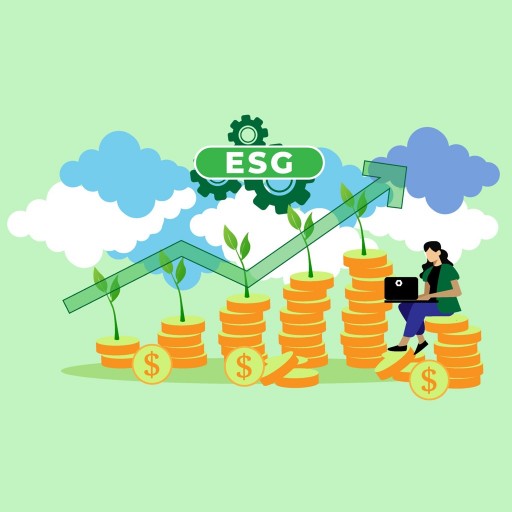
4. Challenges and future of green finance
(I) Challenges: risk management and standard unification
The development of green finance still faces many challenges. The first is risk management. Green projects are often characterized by high risks and long cycles. For example, the high investment in the initial stage of zero-carbon park construction may lead to a longer project return cycle.
A zero-carbon park project faced financing difficulties due to excessive initial investment, and was finally able to move forward with financial support from green financial instruments.
The second is standard unification. There are differences in global green finance standards. For example, the EU Sustainable Finance Taxonomy and China's green finance standards have differences in project definition. This difference increases the complexity of cross-border green finance business.
(II) Future: Technological revolution and model innovation
The future of green finance will be driven by technological revolution and model innovation. AI-native green finance will promote the improvement of approval efficiency.
For example, a bank completed the green credit approval configuration through natural language interaction, and the approval efficiency increased by 40%. Real-time carbon management will reduce the time for corporate carbon emission identification from days to minutes.
In terms of model innovation, green financial SaaS services will emerge. A financial technology company charges fees based on GMV by providing green financial SaaS services, and the customer renewal rate exceeds 85%.
In addition, data assetization will also become a trend, and corporate environmental data elements will enter the green financial trading market, forming a complete chain of "data collection-cleaning-labeling-trading".
The cooling of the ESG investment boom does not mean that green finance has entered a cooling-off period. On the contrary, driven by policy support, industrial demand and technological empowerment, green finance is moving from "marginal innovation" to "mainstream practice".
Despite the challenges of risk management and standard unification, technological revolution and model innovation will open up new growth space for green finance. For investors, short-term returns should not obscure the long-term value of green finance.
For financial institutions, it is necessary to find a balance between compliance and innovation, and promote the high-quality development of green finance through product innovation and risk management.
For policymakers, it is necessary to strengthen international cooperation, promote the unification of green financial standards, and provide financial support for the global low-carbon transition.
In this game of differentiation and coordination, the future of green finance is not only about the sustainable development of the financial market, but also about the common destiny of mankind in responding to climate change.
 1
1 1
1OTHER NEWS
-
- Trump reignites tariff war, global supply chains face another shakeup
- By ZXY 28 Jul,2025

-
- Should you Choose a Real Estate Agent When Buying a Home?
- By Wendy 24 Apr,2023

-
- How much longer can the eurozone hold out? The ECB has reached the end of its rate hike cycle
- By ZXY 01 Aug,2025
-
- How much longer can the seven tech giants of the US stock market withstand high interest rates?
- By ZXY 28 Jul,2025

-
- Real Estate Investment Needs to be Careful!
- By Little Grapes 24 Apr,2023

-
- Yield Curve Inversion Resurfaces: Is There Still Hope for a Soft Landing in the U.S. Economy?
- By ZXY 31 Jul,2025

-
- With China's exports declining, is the global consumption chain beginning to break?
- By ZXY 31 Jul,2025

-
- Credit card points and rewards seem cost-effective, but they actually hide these traps
- By ZXY 01 Sep,2025

-
- "Buy Now, Pay Later" is changing the consumer finance landscape: a payment revolution spreading around the world
- By ZH 25 Jul,2025

-
- How to Effectively Manage Debt: Strategies for Balancing Payments and Savings
- By YCY 07 Jan,2026

-
- Why Do Most People Overlook “Cash Flow Risk”?
- By ZXY 11 Oct,2025

-
- Do small businesses really need tax services? When can they file their own taxes?
- By YCY 27 Jan,2026