Recommended Essential Study Materials for the U.S. Nurse Licensing Exam
For many newcomers, a nursing license is far more than just an exam certificate. It serves as the gateway to one of the world's most structured, heavily regulated, and opportunity-rich healthcare systems.
Whether you're an international nursing graduate, a career changer, or a nursing student preparing for your first exam, the path to becoming a U.S.-licensed Registered Nurse can feel complex and overwhelming.
This guide is written from a practical, realistic perspective. It promises no shortcuts and endorses no specific institutions. Instead, it focuses on what most candidates truly need: a clear understanding of the exam system, appropriate study materials, and effective practice question strategies that align with how the U.S. nursing licensure exam actually operates.
Understanding Before You Begin
Before discussing study materials or practice questions, it's crucial to understand the exam you're preparing for. To become a U.S. Registered Nurse (RN), candidates must pass the NCLEX-RN (National Council Licensure Examination for Registered Nurses).
This exam is not a traditional knowledge-based test; instead, it assesses whether candidates can apply nursing knowledge in clinical decision-making scenarios. Key features of the NCLEX-RN include:
* Computer-Adaptive Testing (CAT)
* Emphasis on patient safety and clinical judgment
* Scenario-based questions requiring prioritization
* Variable number of questions (per candidate)
Understanding the exam structure is vital, as many candidates fail not due to knowledge gaps but because they misunderstand how questions are framed.

Why Choosing the Right Textbook Matters
Unlike academic nursing exams, the NCLEX-RN does not reward rote memorization. The textbook used for preparation must help you understand the correct rationale behind nursing actions, identify unsafe or inappropriate interventions, and think like a U.S.-trained nurse in clinical settings.
Not all nursing textbooks meet these requirements. Effective preparation begins with clear understanding. The NCLEX-RN focuses on four primary patient need categories:
1. Safe and Effective Care Environment
2. Health Promotion and Maintenance
3. Psychosocial Integrity
4. Physiological Integrity
Essential Exam Textbooks
· Saunders Comprehensive Review Guide for the NCLEX-RN
This book is widely regarded as the foundational reference for nursing licensure exam preparation.
- Concise language with clear explanations
- High alignment with NCLEX question formats
- Practice questions following each topic
- Visual aids for pharmacology and procedures
Ideal for: First-time test-takers, international nurses unfamiliar with U.S. exam logic, candidates requiring structured review. Most effective when combined with active practice. Passive cover-to-cover reading rarely suffices.
·Kaplan NCLEX-RN Prep Plus
Kaplan emphasizes test-taking strategies, crucial for CAT (Computer-Adaptive Testing) exams.
- Decision tree methodology for problem analysis
- Emphasis on prioritization and safety
- Simulates authentic NCLEX question formats
Ideal for: Candidates who understand nursing concepts but struggle with exam logic, repeat test-takers, and those with inconsistent practice test scores. Kaplan is best suited for candidates with foundational knowledge needing to enhance critical thinking skills.
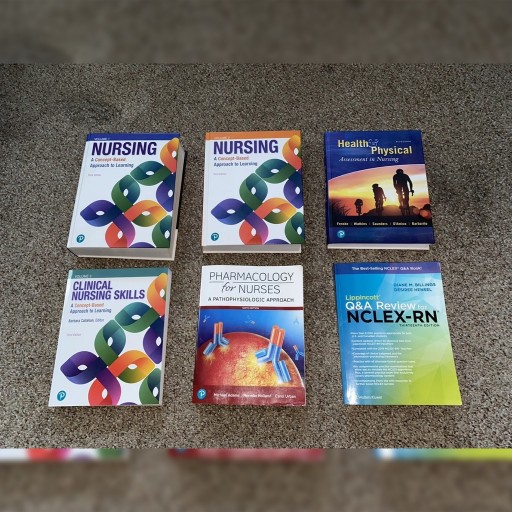
·LaCharity's Prioritization, Delegation, and Task Assignment
Many candidates underestimate the importance of prioritization and delegation questions, yet these are exam focal points. Focuses on the roles of Registered Nurses (RNs), Licensed Practical Nurses (LPNs), and Unlicensed Assisting Personnel (UAPs)
- Realistic clinical scenarios
- Cultivates a “charge nurse” mindset
Target Audience: International nurses unfamiliar with U.S. nursing roles, candidates weak in leadership and delegation. This resource focuses on targeted skill enhancement rather than comprehensive review.
·Pharmacology Review: Davis' NCLEX-RN Drug Guide
Pharmacology is a major challenge for many candidates, especially those trained outside the U.S.
- Focuses on drug classes rather than individual medications
- Emphasizes medication knowledge and patient education in nursing practice
- Clear safety warnings and contraindications
Suitable for: Test-takers struggling with medication-related questions, nurses trained in different drug nomenclature systems. Avoid rote memorization of drug lists. Prioritize medication patterns, side effects, and nursing responsibilities.
 1
1 1
1OTHER NEWS
-
- How much longer can the eurozone hold out? The ECB has reached the end of its rate hike cycle
- By ZXY 01 Aug,2025

-
- Is German manufacturing losing its edge? The latest casualty of the US-China strategic rivalry
- By ZXY 29 Jul,2025

-
- Trump reignites tariff war, global supply chains face another shakeup
- By ZXY 28 Jul,2025

-
- Credit card points and rewards seem cost-effective, but they actually hide these traps
- By ZXY 01 Sep,2025

-
- Fixed deposits are not as good as flexible financial management? Analysis of financial management trends in 2025
- By ZH 24 Jul,2025

-
- Yield Curve Inversion Resurfaces: Is There Still Hope for a Soft Landing in the U.S. Economy?
- By ZXY 31 Jul,2025

-
- How do I Choose Between Selling my Home and Renting it out?
- By Wendy 24 Apr,2023

-
- With China's exports declining, is the global consumption chain beginning to break?
- By ZXY 31 Jul,2025

-
- Why Do Most People Overlook “Cash Flow Risk”?
- By ZXY 11 Oct,2025

-
- How much longer can the seven tech giants of the US stock market withstand high interest rates?
- By ZXY 28 Jul,2025

-
- The widening U.S. fiscal deficit is fueling debt concerns
- By ZXY 30 Jul,2025

-
- Who is the Primary Lender When Applying for a Home Loan? These Points are Important!
- By Little Grapes 24 Apr,2023