There is a treasure trove of seeds hidden in the kitchen: 5 kinds of vegetables that you can regenerate after eating them
Did you know? The vegetable residues that you cut and discard in the kitchen every day may be the starting point of the next round of "free harvest".
In Europe and the United States, more and more families are beginning to practice the gardening method of "regrow veggies" - it does not require a large garden, does not need to spend a lot of money to buy seeds, and does not even require soil. With a windowsill, a clean glass, and a little patience, you can turn the vegetable residues in the kitchen into a mini vegetable garden.
Regenerated vegetables are not only environmentally friendly and economical, but also a way to heal life. The following introduces 5 "leftover vegetable regeneration techniques" that are most suitable for European and American families, with low operating thresholds and full rewards, making your kitchen greener and more interesting.
1. The end of the green onion: the easiest entry plant for urban people
Regeneration method: Use the section of the green onion that is about 2 inches at the bottom and retains the roots.
Operation steps: Insert the green onion section into the glass and add water to cover the roots. Change the water every day and place it near a sunny window. You will see new sprouts in about a week, and you can basically harvest again within 10 days.
Tips: If you want the green onions to grow stronger, you can transfer them to the soil of the flower pot after the new sprouts grow, which will have a better effect.
Suitable for people: Urban residents with small kitchen space and no balcony, especially those who often cook Asian cuisine or Western soups, who can never do without green onions.
2. Lettuce heart: Grow fresh green leaves from salad debris
Regeneration method: Keep the heart of the lettuce about 1.5 inches at the bottom.
Operation steps: Put the lettuce heart in a shallow bowl, add 1 inch of water, and place it on a bright but not directly exposed windowsill. After about 3 to 4 days, you will see new green leaves in the center. After a week, you can harvest some leaves for sandwiches or small salads.
Tips: Butter lettuce and Romaine lettuce have better regeneration effects than iceberg lettuce.
Suitable for: Housewives who often eat lettuce salads and pay attention to the quality of "organic vegetables" or fitness groups.
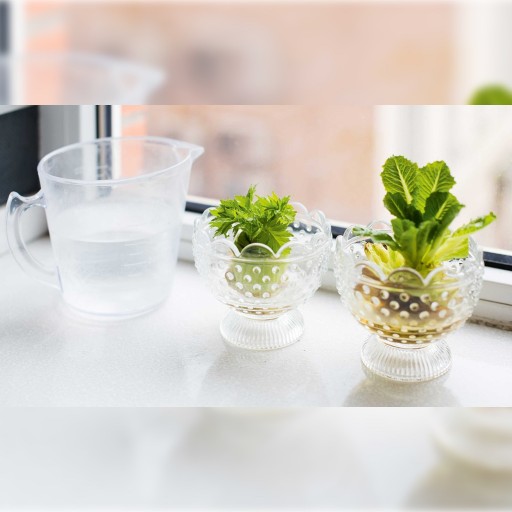
3. Carrot tops: It does not grow a whole carrot, but the leaves are super practical
Regeneration method: Keep the top of the carrot (the place with the leaf base), about 0.5 inches thick.
Operation steps: Slice the carrot tops and place them in a shallow dish, add a small amount of water, change the water every day, and feathery new leaves will grow after a few days.
Suggested use: Carrot leaves can be used to make pesto, mix into salads, or use as herb decoration for roast chicken and soups.
Tips: Although new carrot roots cannot be grown, this process is an excellent "observe plant growth" parent-child activity for children.
Suitable for: Families with children, those who like DIY herb cooking.
4. Celery base: Kitchen regulars can also put it back on the table
Regeneration method: Use the base of celery (about 2 inches high), with a slightly concave center, retaining a tight structure.
Steps: Place the bottom of the celery in a shallow dish and add a small amount of water to cover the roots. New sprouts will grow in the center within a few days. After about 7 to 10 days, they can be moved into the soil to continue growing. The leaf stalks or young leaves can be picked in about 3 weeks.
Tips*: When planted outdoors or in a large pot, celery will regenerate faster and be more likely to be strong and upright.
Suitable for: European and American families who often use celery to season their cooking, especially cooking enthusiasts who like Western soups or Italian cuisine.
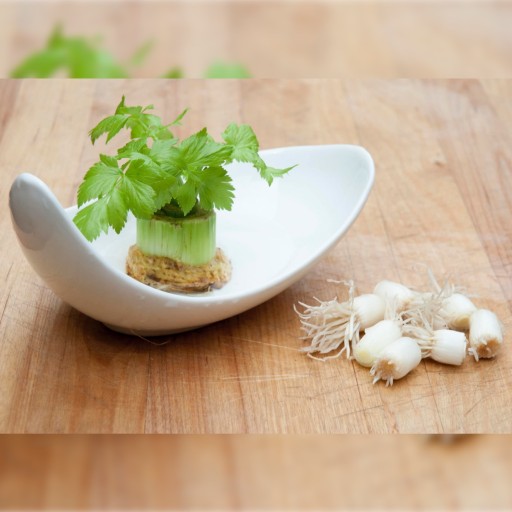
5. Garlic cloves: The longer they grow, the more fragrant they are, a mini garlic garden on the balcony
Regeneration method: Select garlic cloves with intact skin and some sprouts.
Steps: Plant a single garlic clove (root facing down) directly into the soil of a small flower pot, bury it about 1 inch deep, keep it moist, and place it in a sunny place. Green sprouts will emerge within a few days, and tall garlic scapes will grow after a few weeks, which can be cut for scrambled eggs, mixed noodles, etc.
Tips: It takes 3-4 months of patience to harvest a whole head of new garlic, but garlic sprouts can also be harvested and eaten continuously, with a mild flavor and suitable for raw consumption.
Suitable for people: Kitchen players who like to grow spice plants and pay attention to the flavor level of cooking.
Why do European and American families love "regenerative vegetables" more and more?
Regenerative vegetables are not only a trend, but also a practice of returning to "circular life". It can help families reduce kitchen waste, save money on buying herbs and vegetables, and invisibly improve the sense of control and rhythm of life.
Especially for people living in cities or lacking yards, this indoor gardening method has a low threshold and small space requirements. It can also make the windowsill lively and even improve mood. Studies have shown that contact with plants for more than 10 minutes a day can help relieve stress and lower heart rate.
In addition, in many European and American cities, such as New York, London, San Francisco, etc., more and more families use "regenerative vegetables" as part of parent-child activities or environmental education to help children understand the principles of natural cycles.
Regenerative vegetables are not just "whether they can survive", but "how to continue the sense of life"
Don't let the kitchen become the terminal for food. Every scallion root, lettuce heart, and carrot head is a "spare key" left by nature - if you are willing to give it a few more days, you can get a little green, a little freshness, and even a re-imagination of life.
Before you peel vegetables next time, pause for a second and ask yourself: Can this be planted again?
Maybe your next harvest will not come from the supermarket, but from the green sprouts quietly peeking out of the glass of clear water by the window.
 1
1 1
1OTHER NEWS
-
- Should you Choose a Real Estate Agent When Buying a Home?
- By Wendy 24 Apr,2023

-
- Watch out for the Following Credit Card Scams!
- By Wendy 24 Apr,2023

-
- Fixed deposits are not as good as flexible financial management? Analysis of financial management trends in 2025
- By ZH 24 Jul,2025

-
- Why Do Most People Overlook “Cash Flow Risk”?
- By ZXY 11 Oct,2025

-
- Do small businesses really need tax services? When can they file their own taxes?
- By YCY 27 Jan,2026

-
- Who is the Primary Lender When Applying for a Home Loan? These Points are Important!
- By Little Grapes 24 Apr,2023

-
- Global manufacturing is slowing down in tandem. When will deflation strike?
- By ZXY 01 Aug,2025

-
- Is German manufacturing losing its edge? The latest casualty of the US-China strategic rivalry
- By ZXY 29 Jul,2025

-
- How to Avoid Being Scammed by Credit Card Fraud!
- By Wendy 24 Apr,2023

-
- Real Estate Investment Needs to be Careful!
- By Little Grapes 24 Apr,2023

-
- What does the upgraded regulation of digital currencies mean to investors?
- By ZH 25 Jul,2025

-
- How much longer can the seven tech giants of the US stock market withstand high interest rates?
- By ZXY 28 Jul,2025