Latin America’s “de-dollarization” accelerates: Tracking the effectiveness of the RMB settlement pilot
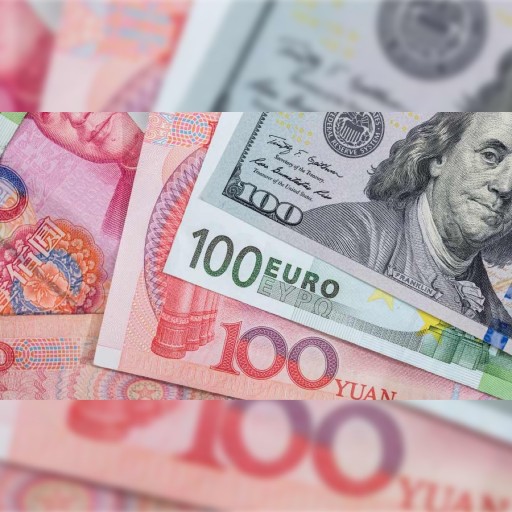
In 2024, a historic turning point is quietly taking place in Latin America. The RMB trade settlement volume between Brazil, Argentina and Bolivia and China will exceed 120 billion yuan, nearly eight times the amount in 2022.
As the Fed continues to squeeze liquidity in emerging markets with high interest rates, Latin American countries are using "de-dollarization" as the core strategy for economic self-help: Brazilian President Lula publicly called for "ending the dollar colonization with local currency".
Argentina used RMB to repay IMF debt, and Bolivia even closed the only foreign exchange exchange in the country.
The core engine of this currency revolution is the "RMB clearing bank network" signed by China and Latin American countries. It has been implemented in 9 countries and covers 78% of the region's trade with China. But what is the real effect? Do companies buy it? Will it trigger US financial counterattacks?
Part I: Three major driving forces of Latin America's "de-dollarization"
1.1 The "blood-sucking effect" of the Federal Reserve
Interest rate scissors: The US benchmark interest rate of 5.25% vs. the average financing cost of 12% in Latin America, resulting in capital outflows of US$87 billion in 2023 (IMF data);
The dollar shortage worsens: the Argentine peso black market exchange rate depreciates by 300% from the official exchange rate, and the short position of Brazilian real futures hits a record high.
1.2 China's systematic layout
Currency swap agreement: A total of 650 billion yuan in liquidity is provided (Argentina alone accounts for 280 billion);
Infrastructure binding: Among the loans issued by Chinese banks in Latin America, the proportion of RMB denominated loans will increase from 3% in 2020 to 37% in 2024;
Technical standard output: China UnionPay's Latin American card issuance volume has doubled in two years, covering 70% of POS terminals.
1.3 Geopolitical Convergence
Left-wing ruling tide: Anti-US governments in Mexico, Colombia, Chile and other countries promote the "De-dollar Alliance";
US sanctions backlash: After Venezuela's oil trade switched to RMB settlement, its exports to China rebounded to the 2019 level.
Critical point signal: In May 2024, Brazil's Vale sold iron ore to China in RMB for the first time (6.2 billion yuan in a single transaction).
Part II: Four practical challenges of the RMB settlement pilot
2.1 "Uneven" on the corporate side
Head companies are enthusiastic:
80% of Brazilian meat giant JBS's exports to China have been converted to RMB settlement (avoiding 4.7% of US dollar exchange losses);
Argentine lithium miner Livent uses RMB to pay Chinese companies for equipment, saving 15 days of letter of credit process.
Small and medium-sized enterprises wait and see:
Peruvian coffee exporters feedback: "Chinese buyers still require US dollar quotations, and RMB settlement requires an additional 3% discount";
The Chilean Cherry Association said: "The RMB reflux channels are limited, and it still needs to be converted into US dollars to pay for shipping costs in the end."
2.2 The "last mile" of financial infrastructure
Clearing efficiency: The average daily trading volume of RMB futures on Brazil's B3 Exchange is only 6% of that of the US dollar;
Lack of hedging tools: The spread of the Mexican peso-RMB forward contract is as high as 4 times that of the US dollar contract;
Liquidity trap: The actual annualized return of RMB deposits held by Argentine companies is -8% (after inflation adjustment).
2.3 The "soft countermeasure" of the United States
SWIFT monitoring: Ecuadorian banana exporters were warned by the United States that "RMB settlement may trigger secondary sanctions";
Long-arm jurisdiction: The United States suspended US dollar clearing services for Bolivia, resulting in its RMB conversion rate passively increased to 43%.
2.4 The paradox of monetary sovereignty
The Brazilian central bank is worried that "over-reliance on RMB may repeat the mistakes of dollarization";
Civil boycott: Paraguayan soybean farmers marched to protest "being forced to accept currencies with greater exchange rate fluctuations."
Part III: The key to success or failure - micro data of five major industries
3.1 Commodities: "Hard Currency" of Oil and Minerals
Successful Cases:
Venezuela's oil exports to China are 100% settled in RMB (80,000 barrels per day);
Ecuadorian copper miner EcuaCorriente uses RMB to pay Chinese contractors, saving 6% of financing costs.
Resistance Point: International iron ore pricing is still based on the US dollar, and only 20% of Vale's trade has completed the conversion.
3.2 Agriculture: Currency Game for Food Security
Breakthrough Agreement: COFCO Group and Brazilian Corn Exporters Signed the First RMB-denominated Long-term Agreement (2024-2026);
Cultural Barriers: Argentine beef exporters are accustomed to using US dollars for hedging, and only 12% voluntarily switched.
3.3 Manufacturing: A Test Field for Industrial Chain Reconstruction
Automotive Industry: Chery's Mexican Factory Has Realized RMB Salary Payment, but Parts Purchase Still Needs US Dollars;
Electronic OEM: The RMB usage rate of Foxconn's Brazilian subsidiary is less than 5% (US dollar supply chain inertia).
3.4 Infrastructure: RMB’s “anchor asset”
Benchmark project: Argentina’s “Kise Hydropower Station” project payment is 100% settled in RMB;
Risk exposure: Bolivia’s lithium power plant was delayed by 14 months due to rising RMB financing costs.
3.5 Retail consumption: From CIPS to QR code payment
Digital RMB pilot: Uruguay’s duty-free shops are connected to the CIPS system, and Chinese tourists’ consumption has increased by 27%;
Localization dilemma: Although Mexico’s Oxxo convenience stores support UnionPay, RMB transactions account for only 0.3%.
Part Ⅳ: Reconstruction of the global monetary system
4.1 Scenario 1: Regionalization success (probability 45%)
By 2027: RMB accounts for 25% of Latin American trade settlements, forming a “resource-industry” closed loop;
Key indicator: China and Mercosur reach a free trade agreement in local currency.
4.2 Scenario 2: US dollar counterattack (30% probability)
Trigger condition: The United States passed the "Inter-American Financial Security Act" and sanctioned RMB clearing banks;
Chain reaction: The Chilean peso plummeted 15% in a single day, and Latin American central banks were forced to restart US dollar reserves.
4.3 Scenario 3: Mixed deadlock (25% probability)
Long-term coexistence: commodities use RMB, manufacturing uses US dollars, and service trade uses local currencies;
New risks: triangular arbitrage transactions give rise to "currency dark pools" and aggravate exchange rate fluctuations.
Part V: Survival Guide for Enterprises
5.1 Importer Strategy
Exchange rate locking tools: use the "RMB-local currency" forward contracts provided by Chinese banks;
Dual quotation system: trade with China uses RMB FOB price, and trade with the United States uses US dollar CIF price.
5.2 Exporter Countermeasures
Layered settlement: 30% of the payment is paid to Chinese suppliers in RMB, and 70% is exchanged for US dollars to cover other costs;
Political risk hedging: Insure the "sanctions insurance" of China Export Credit Insurance (Sinosure).
5.3 Investor Opportunities
Carry trade: Borrow low-interest RMB to invest in Brazilian high-yield bonds (current interest rate spread is 9.2%);
Infrastructure ETF: Pay attention to RMB-denominated infrastructure funds in Latin America (such as the China-Latin America Cooperation Fund).
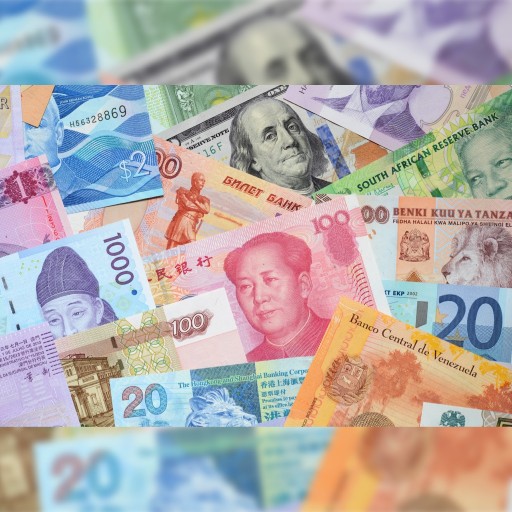
Standing at the crossroads of 2024, Latin America's "de-dollarization" has gone beyond the economic scope and has become the largest-scale experiment for developing countries to compete for financial sovereignty. The success or failure of the RMB here depends not only on China's trade volume, but also on:
Whether it can establish a clearing network more efficient than SWIFT (the average daily processing volume of CIPS in Latin America needs to exceed 100 billion);
Whether it can provide a more stable value storage than the US dollar (need to expand the proportion of RMB government bonds held in Latin America);
Whether it can withstand the pressure of "financial supply cuts" from the United States (90% of Latin American dollar clearing still goes through New York).
For global observers, a more profound revelation is that when Brazilian farmers use mobile phones to scan codes to receive RMB payments, the transfer of currency power has already quietly occurred - not in the central bank's vault, but in every transaction on the streets.
 1
1 1
1OTHER NEWS
-
- Should you Choose a Real Estate Agent When Buying a Home?
- By Wendy 24 Apr,2023

-
- Watch out for the Following Credit Card Scams!
- By Wendy 24 Apr,2023

-
- Fixed deposits are not as good as flexible financial management? Analysis of financial management trends in 2025
- By ZH 24 Jul,2025

-
- Why Do Most People Overlook “Cash Flow Risk”?
- By ZXY 11 Oct,2025
-
- Do small businesses really need tax services? When can they file their own taxes?
- By YCY 27 Jan,2026

-
- Who is the Primary Lender When Applying for a Home Loan? These Points are Important!
- By Little Grapes 24 Apr,2023

-
- Global manufacturing is slowing down in tandem. When will deflation strike?
- By ZXY 01 Aug,2025
-
- Is German manufacturing losing its edge? The latest casualty of the US-China strategic rivalry
- By ZXY 29 Jul,2025
-
- How to Avoid Being Scammed by Credit Card Fraud!
- By Wendy 24 Apr,2023

-
- Real Estate Investment Needs to be Careful!
- By Little Grapes 24 Apr,2023

-
- What does the upgraded regulation of digital currencies mean to investors?
- By ZH 25 Jul,2025

-
- How much longer can the seven tech giants of the US stock market withstand high interest rates?
- By ZXY 28 Jul,2025