Why can't you keep your potted plants alive? The answer is here
Have you ever had this experience? You happily buy a potted plant, carefully place it on your desk, windowsill, or balcony, and look forward to watching it thrive every day, only to find that after a short time, the leaves turn yellow and wilt, and eventually the whole plant withers.
In the end, you can only sigh, toss the pot into the trash, and jokingly say, “Maybe I'm just not cut out for gardening.” In reality, it's not that you're unsuited for it—it's that you haven't mastered some core care principles yet. Today, let's delve into why your potted plants keep dying and the true reasons behind it.
Light: The first “meal” for green plants
Many beginners make the common mistake of placing their potted plants randomly. Some think it looks nice in the bedroom, others prefer it on the coffee table, but they often overlook the lighting conditions. For plants, light is like food for humans—without sunlight, it’s like being starved for a long time.
Most common foliage plants, such as pothos, spider plants, and snake plants, are often labeled as “shade-tolerant,” but this doesn’t mean they don’t need light. “Shade-tolerant” simply means they can survive in low light, not that they thrive in constant darkness. Placing them in a dark corner may work temporarily, but over time, they’ll develop yellowing leaves, leggy growth, or even root rot.
Conversely, if you expose plants that cannot tolerate strong light, such as ferns or succulents, to direct sunlight on a balcony, the results will be even more disastrous: the leaves will be scorched, blackened, and dried out.
Therefore, the solution is quite simple: before placing potted plants, first understand their “light requirements.” Generally speaking:
Sun-loving plants (such as succulents, roses, and cacti) are suitable for balconies, windowsills, and other areas that receive direct sunlight.
Partially shaded plants (such as pothos, asparagus fern, and clivia) are better suited for windowsills with ample diffused light.
Shade-loving plants (such as ferns and maidenhair ferns) can be kept on north-facing windowsills or in well-ventilated indoor spaces.
If your home lacks sufficient light, consider adding a plant grow light—this is a secret weapon for many urban gardening enthusiasts.
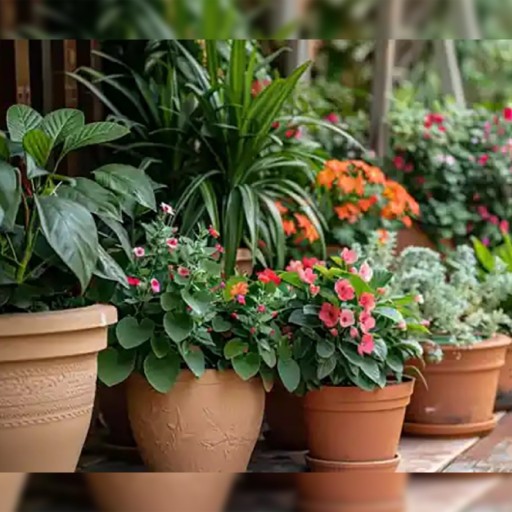
Watering: The number one cause of potted plant death
Ask ten novice gardening enthusiasts why their potted plants died, and at least seven or eight will say it was due to improper watering—either too much or too little.
Many people follow the rule of “watering when the soil feels dry,” but this isn't scientifically sound. Different plants have vastly different water requirements. For example, succulents prefer “thorough watering after the soil dries out,” while ferns thrive in moist environments. Treating all plants the same way is essentially a death sentence for them.
Overwatering has particularly severe consequences. Prolonged soil moisture leads to root suffocation, easily causing root rot. Once root rot occurs, even if the plant still looks green on the surface, it is often beyond saving. Conversely, prolonged drought causes symptoms like dry leaf tips, wilting, and yellowing, with severe cases resulting in direct death.
So how should you water? Here are a few tips:
Observe the leaves and soil: When the leaves begin to wilt slightly, it is a sign of water deficiency; when the soil surface turns white and dry, it is time to water appropriately.
Control the frequency: In summer, when temperatures are high and evaporation is rapid, water more frequently; in winter, when plant growth slows down, water less frequently.
Consider the pot material: Clay pots have good airflow but also lose moisture quickly, so they require more frequent watering; plastic pots retain moisture well, so they can be watered less frequently.
Water thoroughly: When watering, don't just water the surface; water until water seeps out from the bottom of the pot.
Remember this saying: “Succulents fear too much water, ferns fear too little, and flowers and grasses each have their own personalities.”
Soil and pots: Don't let the roots “live in the wrong house”
You may not have considered that sometimes plants don't thrive not because of your care methods, but because they were “planted in the wrong pot” from the start.
Many potted plants sold in flower shops use compact nutrient-rich soil or decorative pots without drainage holes for aesthetic reasons. While they may look beautiful at first glance, they are highly detrimental to plant roots. Roots in poorly ventilated soil are prone to rotting due to oxygen deprivation. Combined with overwatering, the consequences are predictable.
The ideal potting soil should be loose, well-aerated, and drain well. A common mixture is garden soil + leaf mold + perlite/river sand, in a ratio of approximately 4:4:2. For plants like succulents that are more sensitive to waterlogging, you can increase the sand ratio.
As for flower pots, it's best to choose ones with drainage holes. Clay pots offer the best air permeability but are heavier; plastic pots are lightweight and easy to move; decorative pots without drainage holes can be used as covers, with the potted plant placed directly inside, combining aesthetics with practicality.
Repotting is also part of plant care. Most plants need to be repotted every 1-2 years to provide them with more spacious “living quarters” while also refreshing the soil to prevent nutrient depletion.
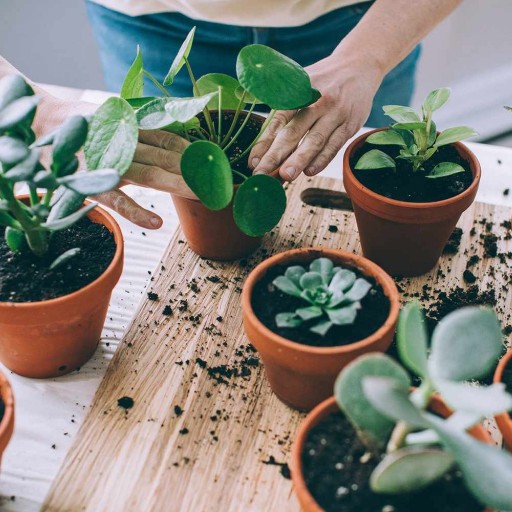
Environment and Habits: Don't Overlook the Small Details
In addition to light, watering, and soil, there are some often overlooked details that can also contribute to the short lifespan of potted plants.
Temperature: Most indoor plants thrive in temperatures between 15°C and 30°C. In winter, placing them near a window can expose them to nighttime cold temperatures, risking frostbite; in summer, placing them near an air conditioner vent can expose them to cold air, risking “catching a cold.”
Ventilation: Air circulation is crucial for plant health. Prolonged confinement in an airtight space can foster the growth of pathogens and pests. Opening windows for ventilation is the simplest preventive measure.
Fertilization: Many people view fertilizers as optional, but plants, like humans, require nutrients. Prolonged lack of fertilization can result in weak growth and dull foliage. During the growing season (spring and summer), apply diluted liquid fertilizer once a month; reduce or cease application in autumn and winter.
Pests and diseases: Common pests in potted plants include aphids, red spiders, and scale insects. Once detected, promptly treat them with soapy water, alcohol swabs, or specialized pesticides. Do not wait until the leaves are infested before taking action.
Mindset: Don't rush for quick results; take your time
Finally, I'd like to discuss the mindset when caring for potted plants. Many people, after purchasing plants, want them to grow vigorously and bloom continuously right away. They then overwater and over-fertilize, inadvertently causing harm. Caring for plants is a practice in patience; it requires you to observe and understand the natural rhythm of plants.
Sometimes, the reason your potted plants keep dying isn't because you're clumsy, but because you're too impatient. Plants are living beings; they need time to adapt to their environment and grow roots. Instead of seeking “instant results,” learn to enjoy the process of accompanying them.
Caring for potted plants isn't difficult; what's difficult is whether we're willing to take the time to understand them. Light, watering, soil, temperature, ventilation, and fertilization—these seemingly trivial details are precisely what determine whether a plant can thrive long-term.
Once you master these key points, you’ll discover that those plants you once thought were “impossible to keep alive” can actually flourish under your care. Next time you walk into a flower shop and choose a plant you love, don’t worry about it dying. Because you already know the answer.
 1
1 1
1OTHER NEWS
-
- Should you Choose a Real Estate Agent When Buying a Home?
- By Wendy 24 Apr,2023

-
- Watch out for the Following Credit Card Scams!
- By Wendy 24 Apr,2023

-
- Fixed deposits are not as good as flexible financial management? Analysis of financial management trends in 2025
- By ZH 24 Jul,2025

-
- Why Do Most People Overlook “Cash Flow Risk”?
- By ZXY 11 Oct,2025

-
- Do small businesses really need tax services? When can they file their own taxes?
- By YCY 27 Jan,2026

-
- Who is the Primary Lender When Applying for a Home Loan? These Points are Important!
- By Little Grapes 24 Apr,2023

-
- Global manufacturing is slowing down in tandem. When will deflation strike?
- By ZXY 01 Aug,2025

-
- Is German manufacturing losing its edge? The latest casualty of the US-China strategic rivalry
- By ZXY 29 Jul,2025

-
- How to Avoid Being Scammed by Credit Card Fraud!
- By Wendy 24 Apr,2023

-
- Real Estate Investment Needs to be Careful!
- By Little Grapes 24 Apr,2023

-
- What does the upgraded regulation of digital currencies mean to investors?
- By ZH 25 Jul,2025

-
- How much longer can the seven tech giants of the US stock market withstand high interest rates?
- By ZXY 28 Jul,2025